Saturday, 21 September 2019

Obscure Visual Novels: Hierofania, Hierofania 2 & Rhyme or Reason by Ludeshka (Short Reviews)

https://img.itch.zone/aW1hZ2UvNzI1OTAvMzMzNzE5LnBuZw==/original/7Dfm3b.png
In my never-ending journey through the world of EVNs, I often happen to stray away from the more mainstream titles or things explicitly sent to me for review, and into the world of extremely niche games published by countless small-time developers, either for one of the many VN-related game jams or for no reason in particular. While most of them end up being unremarkable, many others turn out to be diamonds in the rough, showing really promising elements and fresh ideas, but being brought down somewhat by their small budgets and lack of polish. Rarely, I find really excellent and memorable titles, that are able to overcome their limitations through thanks to their author’s creativity and storytelling prowess – and while they are definitely worth writing about, they’re usually also small enough that they don’t fit into most of the formats I’ve used so far. For this reason, this new series will be dedicated to such games: mostly unknown, short EVNs that I’d love to see receiving more attention. And my first picks are three excellent, freeware games by the secretive developer working under the name Ludeshka: Hierofania, Hierofania 2 and Rhyme or Reason.
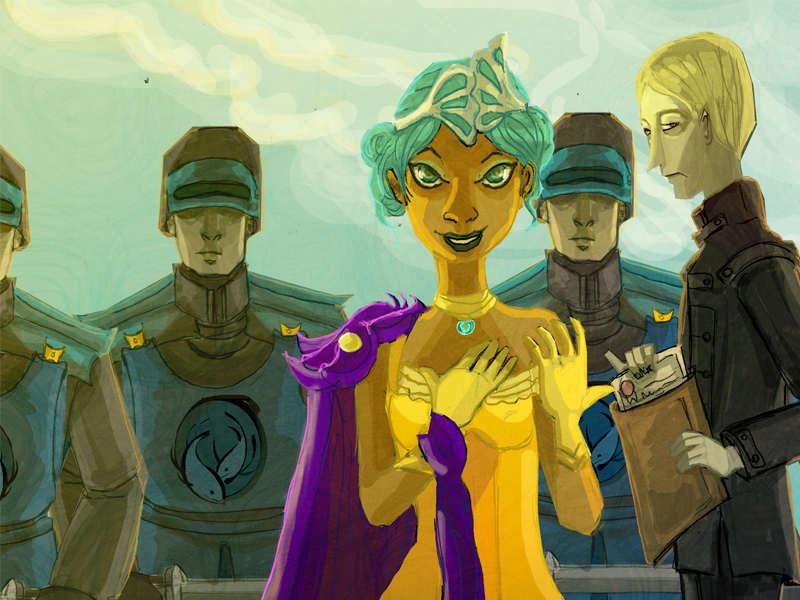
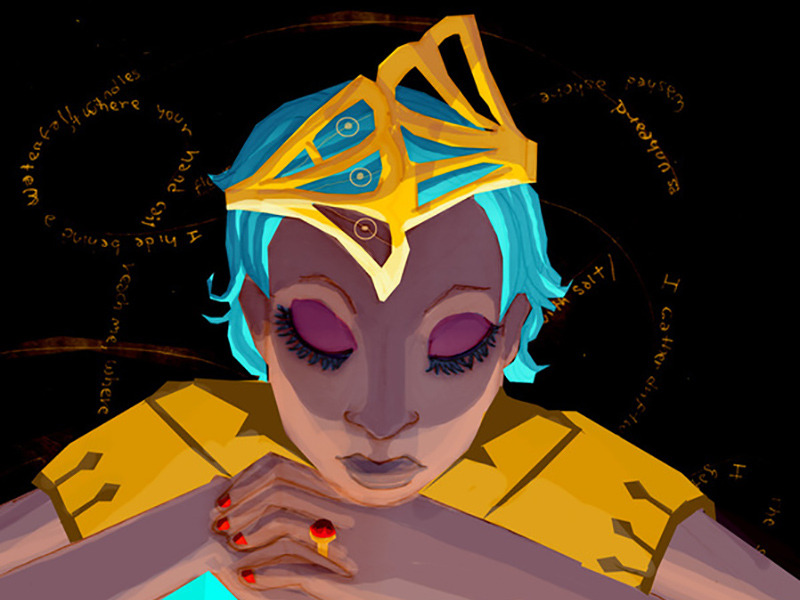
            Probably the most unique aspect of Ludeshka’s games is her art, which feels heavily inspired by expressionism. Rough, often slightly deformed shapes and exaggerated or unnatural colours seem to match the emotional aura of the characters and the climate of the scenes she portrays, rather than present them in a realistic manner. Often her illustrations are not something you would call pretty in the conventional sense, but their striking features give her VNs a lot of personality (particularly when combined with the grim storylines of her “flagship” titles, Hierofania 1 and 2) and it’s hard to ignore their artistic merit. The distinct artstyle is closely matched by the surprising and interestingly-structured plotlines – those, however, will be best to deal with one by one. So, please join me in this short overview of Ludeshka’s work, as I explain why it offers a lot more than you might expect at first glance.
hierofania+title+screen.png
Hierofania is the tale of Crocket, possibly the last trainee in the dying order of Knights of Utrecht. Ten years after their god stopped manifesting and the magic powers he blessed his disciples with disappeared, only a handful of Knights remained, still clinging to their ancient creed. When a mysterious stranger, chased by the clerics of another deity for the crime he claims he didn’t commit, appears at one of Knight’s remaining strongholds and asks for help, Crocket is sent on a mission to prove his innocence – one from which few expect her to came back alive.
            I won’t hide that I find the setup and climate of Hierofania absolutely fascinating: the game is short, with around 3 hours of content, but manages to establish a cohesive setting that brilliantly subverts some common fantasy tropes. Be it Crocket, a naïve disciple of a dead religion who still believes that her faith will one day be rewarded with a miracle. Be it her captain, who gouged his own eyes in a gruesome ritual, one that was once a source of great power granted by his deity, but now simply made him a cripple. Or be it the stranger, who obviously holds some dark secrets, but the severity of which is hard to imagine before they’re revealed by himself in the bad endings… It’s hard to find a major set piece in this story that doesn’t feel captivating and the striking visual design only makes everything more intriguing. The short plot didn't make it possible to explore this world to the fullest, but the whole experience still feels extremely fresh – and that’s something you rarely get reading your 200th+ EVN.
            If I was to complain about something in Hierofania, it’d probably be the choices – they’re quite often cryptic or feature options very similar to each other, so you can’t really predict their consequences and usually have to unlock alternative endings through pure trial-and-error. This is something of a recurring theme in all of Ludeshka’s games and negatively impacted my experience with them, as I simply dislike this kind of confusing story structure. Still, it was a relatively minor issue in all these cases, and in the first Hierofania and Rhyme or Reason, the choices at least weren’t numerous enough for them to become frustrating mazes. So, I still highly suggest giving Hierofania a chance – with all its limitations, it’s an utterly unique story that will inevitably leave you with a strong impression.
 
Final Rating: Highly Recommended
tumblr_inline_oe2x7eLOZI1tjfqol_1280.jpg
Herofania 2 might seem like a repeat of certain themes from the first game, starting with a death of a goddess and despair of people deprived of her blessings, but ultimately tells a very different story, only loosely connected to the one from its prequel. It also offers a lot more significant branching, more visual assets (including simple animations) and a better sense of player’s control over what happens in it. It follows the story of Caramela, a young queen of a small fishermen kingdom of Currents. After her lands and her own family were ravaged by a mysterious plague a decade earlier, she ended up receiving the crown while unprepared for ruling and became dependent on her regent Senteltje, a man with a dark reputation and a history of conflict with the deceased queen. With the Kingdom devoid of its patron deity, the Sea Goddess also killed by the mysterious disease and a war raging between its neighbours, Caramela will be forced to finally choose a path for herself and her country.
            The game is an overall improvement over the first Hierofania, both in its production quality and its storytelling, but above all, maintains all positive qualities of its prequel. The characters are immediately memorable and interesting, the story is engrossing and develops in directions that are never banal or easy to predict. Caramela herself is a much more complex character than Crocket, quickly growing beyond the first impression of a spoiled and disinterest noble, content to let others take the burden of ruling. While how much agency she’ll ultimately have is heavily dependent on player’s choices, there’s a surprising variety in how her story can be resolved, without any obvious “good” or “bad” outcomes – in politics things are rarely black and white, and even conclusions such as Caramela forever staying Senteltje’s puppet is not necessarily bad for her or for Currents. One of the more decisively-positive endings can be considered the canon one, as it rewards you with a short epilogue connecting the story directly with the events of the first game, but this feels more like just an excuse to tease the overarching plot, which was meant to be resolved in the third entry in the series. Ultimately, Hierofania 2 is a story that stands very well on its own and lets you take away from it whatever you wish – and this makes it that much more worth reading.
 
Final Rating: Highly Recommended

rhyme-or-reason-review+(3).png
Rhyme or Reason, released by Ludeshka between Hierofania 1 and 2, was an attempt at creating a more traditional romance VN and diversify from the fantasy drama driving the author’s main project. It’s a short game, with around 2 hours of content, following the story of Rhyme – a protagonist whose face and gender are never shown, but who still manages to show a set of interesting characteristics. They’re an aspiring singer and songwriter, passionate about their work, but also too demotivated by their tedious life and self-doubt to really chase their dreams. What has a chance of changing this sorry state of affairs is an invitation from protagonist’s close online friend, Karen, to stay for a week at her house, in a scenic small city by the ocean. After getting there they immediately meet Nancy, a somewhat-overwhelming aspiring singer, who’s in the middle of a desperate search for a guitarist for her band – the previous one disappeared, just before a major gig. Depending on the way you navigate this situation, it can lead you to 6 different endings, including two romantic conclusions featuring one male and one female character.
            Rhyme or Reason’s story shares some of the positive qualities of Hierofania, despite its vastly different tone: it tells you a lot about the characters through meaningful bits of information, rather than lengthy backstories and keeps you engaged with interesting story developments and fun dialogue. Thanks to all this, it manages to tell a rather satisfying and complete story in a very short time. Admittedly, the unusual artstyle does not work as well with this kind of mundane themes as it does with fantasy, but still feels properly expressive and makes the characters look unique. Overall, the game is not as engrossing as Hierofania and feels a little bit rushed, with maybe a few too many questions left unanswered and the endings very much open-ended. Still, it’s a fun short story that I don’t regret spending my time with and if you like simple romance VNs, I recommend checking it out.
 
Final Rating: Recommended

 
Sadly, Ludeshka's VN development endeavours slowed down significantly after the release of Hierofania 2 and it's going to be a while before we see another game from her (and especially before Hierofania 3 comes out, as it was explicitly put on hiatus). While there's still hope for the Hierofania trilogy to be concluded one day, all the games I've tackled in this post are self-contained and satisfying stories, worth checking out even if the “true” conclusion to some of the subplots would never arrive. They’re also completely free, which in my book is always a major positive. So, if what I wrote about these VNs piqued your interest even a little bit, be sure to give them a chance – you won’t be disappointed.
 
Also, as the last note, at some point mobile versions of both Hierofania games were available on Google Play, published by Visual Wordplay. However, just like many ports by that company, they seemed to suffer from serious technical issues. If you want to play Ludeshka’s games, I suggest downloading them for PC from her Itch.io page.

Friday, 6 September 2019

Steam Curator Connect Wrap-Up: Summer 2019 (Jack-In-A-Castle; Elf Enchanter: Arousing Anima; Kingdom of Lies; Caladria Chronicles)


Welcome back to another one of my seasonal (yup, I get enough things sent my way for that to be a thing now) summary of games given to me for review through the EVN Chronicles Steam Curator page. Once more, I’ll be focusing on the shorter titles, that would most likely be hard to write a full-length review about or had to give up their spots for games I really wanted to cover in detail. This, of course, doesn’t mean there are no really interesting VNs among them. In today's list, the title standing out the most is undoubtedly Jack-In-A-Castle, a whimsical tale about a world populated by living toys and a marionette investigating the disappearance of its king. This extended version of a free NaNoRenO 2019 VN proved to be an unusual and twisted experience that caught me completely by surprise. While the other three games I’ll cover this time didn’t offer similar levels of quality, all of them proved interesting in their own ways – even if they didn’t subvert my expectation quite like they wanted to...

VHI7E6.png
Every once in awhile, I stumble upon small VNs so unusual and creative that they’re hard to categorize. Jack-In-A-Castle is, by its own admission, a rather cute, cartoonish boy’s love story happening in a fantastic world populated by animated toys. However, there are a few caveats to it: the BL label feels somewhat irrelevant considering the androgynous designs of the main characters (particularly the protagonist, Marion) and the relatively tame relationships they develop. Between all those cute living toys and minimalistic love stories they’re involved in, gender barely seems to hold any meaning. At the same time, the cartoonish art can be misleading in its own way – the game features some mature themes and the characters, Marion in particular, can be quite devious and even violent (although such things are mostly presented off-screen).
                The three hero routes all develop in pretty unpredictable directions, leading Marion to resolve the mystery of the missing king and the tenuous regency of his right-hand-man, Jack, in vastly different ways (or not at all). This makes for a surprisingly engaging and fun experience – varied, cleverly written and executed with a lot of attention to detail. The game’s environments change to reflect the plot progression (mainly through the constant spread of mysterious vines infecting the titular castle). What seems like throwaway choices can lead to some drastic consequences, completely subverting your expectations. Everything is presented in a distinctly stylish manner, with the simplicity of character and background designs being outweighed by their expressiveness and the quirky atmosphere they create. The overall impression I’ve got from Jack-In-A-Castle was extremely positive and I highly recommend checking it out – unless you’re hoping for traditional VN romance, it definitely won’t disappoint you.

Final Rating: Highly Recommended

capsule_616x353.jpg
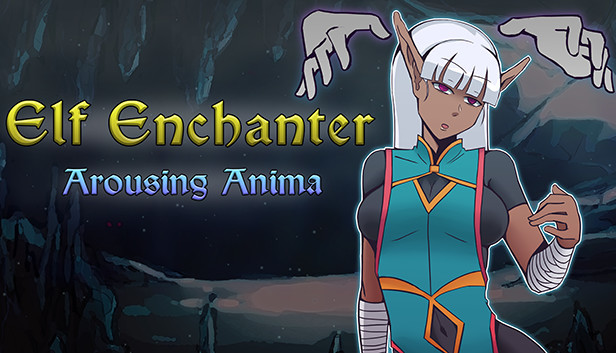
Belgerum is a developer of small hentai games that combine VN-style storytelling and simple, RPG-like battle mechanics. After his surprise hit from 2018 NaNoRen0 contest, Demon King Domination, he capitalised on it with an extended, commercial version that reached decent popularity on Steam. Later he also created a follow-up game, Magebuster, once more featuring a supernatural, villainous protagonist and an antagonistic heroine he has to dominate. His third title, Elf Enchanter, was meant to partially break away from this formula, being a “pure” visual novel and not focusing so much on dark themes. 
                Featuring a support mage that accidentally casts a taming spell on his dark elf companion, making her incapable of opposing his commands, it sounded quite intriguing in theory: I usually find games where you’re given complete power over other people, and can use it for either good or bad, very compelling. Elf Enchanter, however, does very little with this setup: featuring only a few choices and three possible endings, it’s too short and basic to really engage you in its narrative, while the 5 h-scenes (two unavoidable one and one extra per each ending) are average in quality and only one of them stands out with some unusual elements. It’s quite adequate as a $1 nukige (that’s how much it costs on Steam), but ultimately very forgettable – and that’s a shame, as with just a bit more content and complexity, it could’ve been a really cool experience worthy of a much more serious price tag. Maybe another time…

Final Rating: Cautiously Recommended

header.jpg?t=1561956295
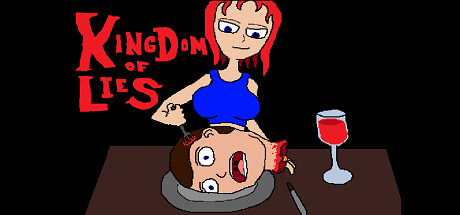
The fact that Visual Novels are somewhat easy to put-together, even without any programming prowess or high-quality assets involved, makes it quite common for extremely low-effort ones, or straight-up troll games in VN form, to reach Steam. Kingdom of Lies looks like one of the latter, a cynical attempt at trolling and getting attention with edgy content, but is actually something a bit different – a confusing, broken and ultimately unplayable mess, that still quite a lot of work and thought went into. It features a really strange story about a maniacal-murderer protagonist, guided by a demon (represented by gradually-decaying rat corpse) into a killing spree in a modern-fantasy setting. It then combines it with some literally-impossible Hotline Miami-style gameplay sections and minigames that will make your head hurt (although the combination of shogi, go and chess on a three-dimensional board and with a possibility to modify rules was pretty hilarious). All of that coupled with MS Paint-grade visuals, tons of anti-SJW memes and high levels of randomness. It’s quite possible that I haven’t seen this much effort going into something so overwhelmingly bad since Sonic Boom and if the game was just a battle bit less broken, I could’ve even suggested checking it out for its hypnotizing trainwreck-like qualities. It also involves a few genuinely cool ideas: for example, the rat corpse/demon you communicate with before every mission is quite disturbing, with the constant decay and disease it seems to spread all around it being well-portrayed despite the simplistic graphics. In reality, though, the experience of playing Kingdom of Lies is just too confusing and frustrating to be worth it.

Final Rating: Not Recommended

1e15aca94cef37fcd51dcfb6bb291d5af5141c0f.png
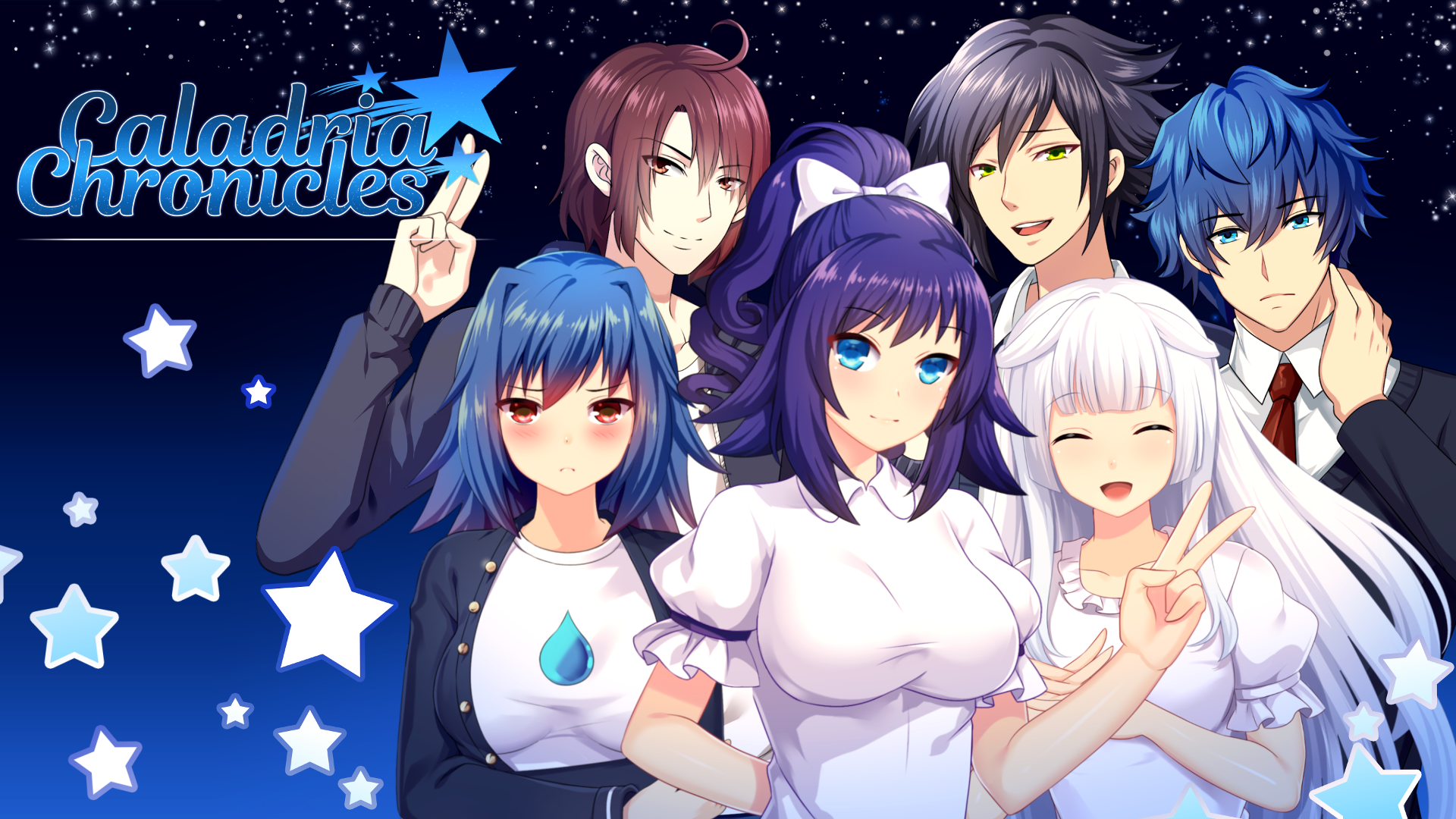
Caladria Chronicles is a debut VN by a small studio called Starlight Visual, one which was meant to launch a whole saga set in the titular modern-fantasy world of Caladria. It’s also, by most measures, a rather spectacular trainwreck: overly ambitious, unfocused and grossly unpolished in its execution. The full voice acting is a mixed bag at best, with some characters being hard to listen to and whole lines misplaced or missing. The narrative lacks clear protagonists, and introduces way too many character and subplots within its 3-hours reading time. The humour is very much hit-and-miss, with two rather unbearable chuuni characters at the center of most of the gags. The anime clichés are everywhere and their presence, along with many explicit references to Japan, are utterly confusing unless you took your time and read the game’s encyclopaedia, explaining many crucial lore details that are never properly communicated in the story. An encyclopaedia which, BTW, is also full of errors and clunky writing.
                Why do I leave this game with a positive recommendation then? Not because I necessarily advice reading it, but because of a huge potential I see in its setting and some of its characters. Caladria is a copycat world – a planet whose people used the help of mystical being known as angels to gain knowledge of Earth’s history, technology and culture. They then proceeded to copy and expand on all of it, boosting their own development in incredible ways. In the process, Caladria lost most of its own identity, with whole nations mimicking Earth’s civilizations and identifying with these artificially-imported, second-hand cultures. With a few forms of magic and a tumulous political situation added to the mix, the setting itself offers great promise, even if the first game only briefly touches on its most interesting aspects. While for now, Caladria Chronicles can be only worth experiencing as an unfortunate curiosity, if its authors manage to learn from their mistakes, they have a good basis to create something really memorable and compelling. Skip on this VN, but keep Starlight Visual on your radar – personally, I’m extremely curious where the Caladria project goes next.

Final Rating: Cautiously Recommended

And this would be it for this season’s Steam Curator summary! I hoped to include at least one more game in it, but the real-life responsibilities forced me to move it to the fall update – that one will hopefully be more substantial, including some more notable games and ones that were waiting particularly long to get covered. Still, I hope you all enjoyed this small update and as always, my huge thanks go to the developers that decided to share their work with me. I hope this feedback, even if not always positive, will be of use to them and maybe even inspire (even) better VNs in the future. Until the next time!

Friday, 23 August 2019

Perceptions of the Dead 2, Episode 2, 3 & 4 Review (Visual Novel DLC)

1_slider_potd2_website-1.jpg
Perceptions of the Dead 2, released on Steam on June 2018, is a light-horror visual novel by Ithaqua Labs, a team whose titles stand out from the usual output of Western VN studios through their unique, vibrant artstyle and full voice acting. Soon after the game’s initial release, I’ve reviewed its then-available first chapter, Misty Mournings. It was an hour and a half piece of content tying together all the stories and characters from the first, freeware Perception of the Dead, with the main storyline revolving around nulls – mysterious ghost-devouring creatures that pose a mortal threat to both spirits and human mediums. This, however, was meant to be only the beginning of the game’s story, with three more chapters promised in the Kickstarter campaign and scheduled for release over the next year. With the fourth story, House Haunting, now available and Perceptions of the Dead 2 experience complete, I’ve decided to revisit the game and take a closer look at all that additional content. Did it maintain the positive impression I’ve got from the first chapter?
ss_b20a150da5bc11dacc5f17abe884a421e754c1f2.jpg 
The game’s unique artstyle and creative visual design are still among its greatest assets
 
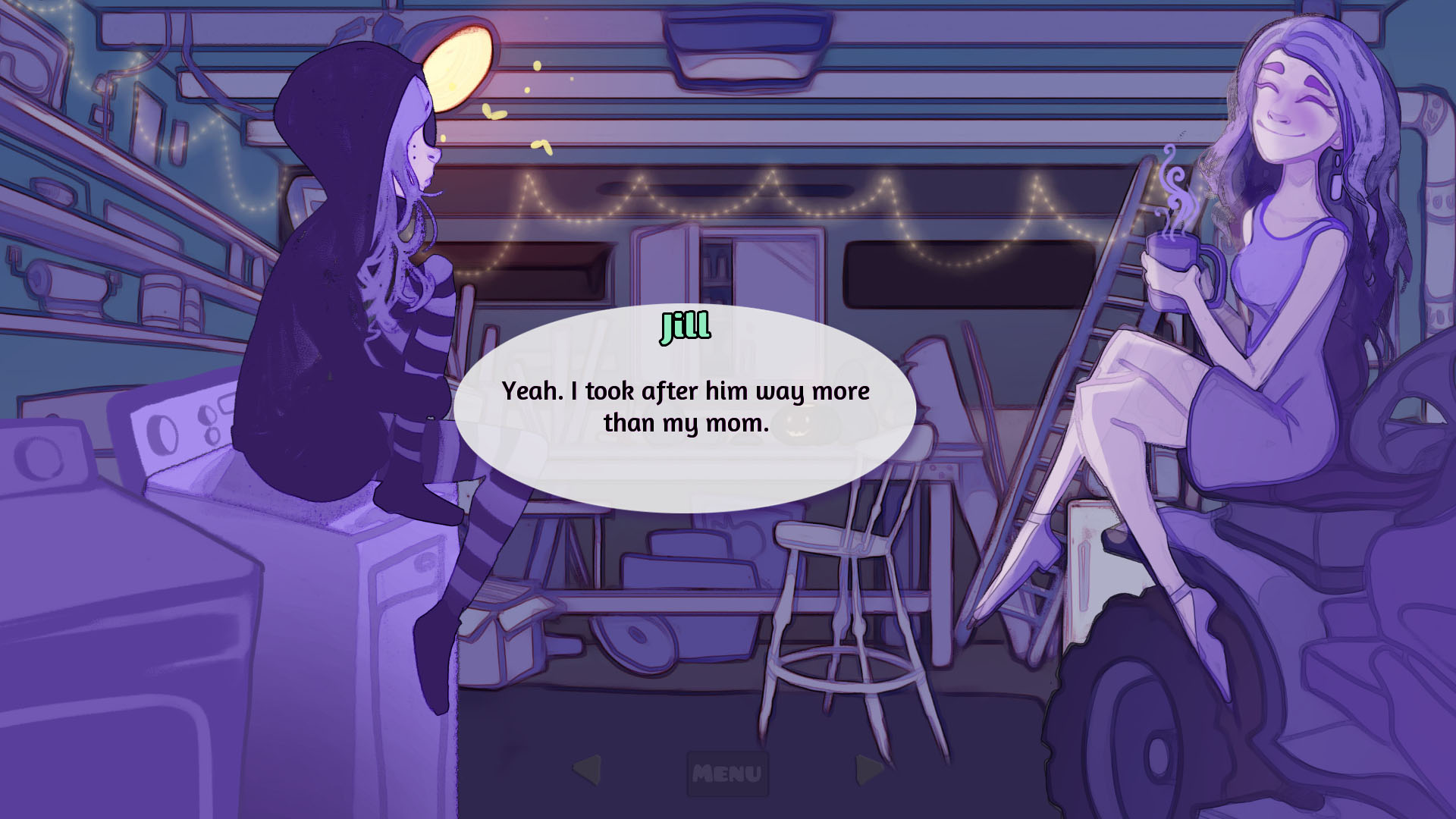
Perceptions of the Dead is a strange series in that it’s made of relatively short episodes telling interconnected, but ultimately self-contained stories with a very limited overarching narrative. While some could expect that to change with Perceptions of the Dead 2, a larger and commercially-oriented project (while the first game was more or less a collection of Ithaqua Labs’ early works in a shared universe), the new chapters also take their own paths, exploring the game’s world and characters only in vague connection to the events of the initial story, Misty Mournings. Episode 2, Undercover Undead, features a brief section exploring the fallout of the previous events, but focuses on Jill and Tyrone investigating disturbing paranormal phenomena in a sleepy town. This leads them to infiltrating a local high school and discovering a threat way over their expectations. It is also the first time Tulip, the ghost of a teenager which haunts Tyrone, plays a major role, and the largest of new chapters – over an hour of reading with significant branching paths. Episode 3, Garage Reverie, features Jill talking at her home’s garage with her childhood friend. This gives us the opportunity to learn about her backstory and the ways she copes with the discovery of the supernatural world turning her life upside-down. Episode 4, House Haunting, briefly explores the developing relationship between Marcus and Ripley, the other major characters of the series, and reveals the true origins and nature of nulls. Those last two offer around 30 minutes of content, making all the post-launch chapters together offer a similar amount of reading as the game’s initial build.
f24eb9191027d70ca6500738284dd2bd30c67f4f.jpg
The overacted VA and annoying personality of Tulip take quite a lot of appeal from the second story, but is the only major issue I had with the new chapters
 
While, at this point, I could complain about lack of any grand narrative within PotD2, the episodes themselves are rather enjoyable and it’s hard to not appreciate the variety they offer – from the genuinely-interesting mystery plot of the second episode to the long, nostalgic dialogue sections of the third one, pretty much everything the game has to offer is enjoyable in its own unique ways and adds to our understanding of its world and characters. Jill and Tyrone and still very good protagonists, both likeable and relatable despite their involvement with the supernatural. Art is still a joy to look at and is often used in a way atypical for VNs – for example, Garage Reverie uses panoramic, mildly animated drawings and comic-book-like dialogue clouds to present the conversation between Jill and her friend. More dramatic scenes are often portrayed with interesting visual tricks and distorted images fitting the mild Lovecraftian theme of the game. Voice acting is top-notch as always, with one glaring exception – Tulip, whose lines are nearly universally overacted and annoying. This was at least partially by design, as her dialogue makes it clear the writers wanted her to appear as an irritating brat over-the-top obsessed with Tyrone, but the substance of her lines could easily communicate that without making them unbearable. This contrasts strongly with the overall very solid direction of the voice acting and leaves a very unfortunate taint on my whole impression from PotD2’s new content – the role Tulip plays in Chapter 2 is crucial, especially in one of the story branches, making it significantly less enjoyable. I’m still surprised that a studio with such a strong record in this department let something like this slip through.
JJ0YWz.jpg
The length of the second and fourth episodes might be disappointing, but all four stories together create a rather compelling experience and a good value proposition
 
In the end, though, I think the new content for Perceptions of the Dead 2 offers some very solid additions, making the game and overall satisfying and well-priced package (currently sitting at $7.99 on Steam). It’s still a very unique and peculiar title that might not fit into people’s expectations: it plays on horror tropes and contain some grim/disturbing moments, but is ultimately fun and light-hearted (and distinctly colourful when it goes to visuals). It also puts quality over quantity, making even the really short episodes work thanks to their unique style and well-written stories. The 3-4 hours of reading time for the whole game might seem like relatively little, but most of what is in there is way more memorable and fresh-feeling than your usual EVN content. Of course, I can’t completely ignore the tiny length of the final two episodes and the aforementioned problems with the VA, thus making my final score for PotD2 new episodes slightly lower than the one I gave to the initial release – however, I still wholeheartedly recommend giving it a chance, especially if Lovecraftian themes and horror-comedy are something you usually enjoy.

Final Score: 3/5

Pros:
+ More of great artwork and fun, creepy story
+ Interesting and varied storytelling
 
Cons:
- Tulip’s VA
- Short episodes with little overarching narrative

Buy Perceptions of the Dead 2 on Steam or Itch.io

Friday, 16 August 2019

Shall We Date? Blood in Roses+ Review & NTT Solmare's Despicable Business Model (Predatory Mobile Visual Novel)

250kLikes_BL_1920_1080.jpg
I’ll be completely honest: I didn’t have a good opinion of NTT Solmare even before approaching the game this review is about. After exploring their sole non-otome visual novel, Moe! Ninja Girls, I was absolutely stunned with the predatory monetisation and poor quality of that title. I was still curious about their otome projects though and decided to check out one featuring the theme I personally enjoy a lot: vampires. Thus, I ended up playing Blood in Roses+, one of the over 20(!) games in the Shall We Date? series and what I found there was an extension of my Moe! Ninja Girl experience, along with some interesting surprises (which doesn’t mean any of them were particularly pleasant).
                First, however, a bit of context is required. NTT Solmare is a Japanese company producing e-books and mobile games primarily for the Western market. Shall We Date? Otome games are their flagship product and can be split into two categories: paid apps, which are mostly Android/iOS, English-localized ports of other companies' otome VNs, including some Idea Factory/Otomate titles, and free apps which are produced by NTT Solmare themselves. Since 2011, they’ve released literally dozens of cheaply-made, but aggressively monetized games, particularly in the free-to-play segment. This is also the category where Blood in Roses+ fits in, being a fully free-to-play mobile VN, in which you can theoretically experience an impressive and constantly-expanding pool of content without paying anything. There’s a catch though… Or a dozen, which are all worth discussing in detail due to the unbelievable abuse of the VN format they represent.
1520774962-3431320296.png
The consistent setting and a cast of characters shared between the many alternative-universe scenarios are among the game’s few redeeming qualities
 
Before I get to ripping the game to pieces for its business model, what is Blood in Roses about? At its core, it’s a supernatural romance featuring a human protagonist becoming involved with a group of powerful vampires and other fantasy creatures – nearly all of them in the form of ridiculously-attractive ikemen, of course. Every one of the 25(!) hero routes (there’s a token yuri one too) revolves around the Hotel Libra Sincera, a castle built at the crossroads between the human and magical world, and a core cast of characters, including Alfred and Rupert, the vampire twins in charge of the hotel. There’s also the mystical rose garden present within the Libra Sincera's walls, which the game takes its title from and which usually proves to be of crucial importance to the protagonist. Every hero arc can be considered an alternative-universe scenario, telling a self-contained, conclusive intrigue and romance scenario. While there are some recommended “beginner routes” that work best as an introduction to the game’s lore, the only thing you probably shouldn’t do is starting with one of the arcs featuring the “hunter” protagonist – the second version of the lead character, added in one of the later updated to the game, original one being the “witch”. Those play a lot on the previously-established lore and will be more fun to experience if you know the “core” stories like Alfred’s and Rupert’s.
                While, in general, the game’s writing is generic and often quite uninspired, most routes have their interesting moments and the ability to see so many version of the story and different perspectives is quite fun, making the game more enjoyable the more you play it. The protagonists (they’re explicitly two versions of the same person from different timelines, but are also different enough in their skillsets and behaviour to be considered separate characters) are also rather fine, with a major caveat that I mostly enjoyed them when choosing “moonlight” dialogue options. This is part of the game’s karma system, determining which ending you get: moonlight choices usually involve the protagonist being more decisive, aggressive and openly affectionate towards the hero, while the opposite “sunlight” route basically means her being a bag of wet noodles (or in other words, a stereotypical otome protagonist). Especially in the case of the witch, who starts her story as a prisoner of the vampire brothers, sunlight choices are rather jarring to observe and often lead to submissive endings that rubbed me the wrong way.  
bir_by_szafalesiaka_dde6tmf-pre.jpg?token=eyJ0eXAiOiJKV1QiLCJhbGciOiJIUzI1NiJ9.eyJzdWIiOiJ1cm46YXBwOjdlMGQxODg5ODIyNjQzNzNhNWYwZDQxNWVhMGQyNmUwIiwiaXNzIjoidXJuOmFwcDo3ZTBkMTg4OTgyMjY0MzczYTVmMGQ0MTVlYTBkMjZlMCIsIm9iaiI6W1t7ImhlaWdodCI6Ijw9MjEzMCIsInBhdGgiOiJcL2ZcL2E4Yjg4MzU1LWM4YzctNGIxNi04YTdhLTRhYTlmYzFiMDRmZlwvZGRlNnRtZi00YjkyZjVkYy1kOWE1LTRhMWYtODI4Ni1iMjhmYTI0ZDUyMTguanBnIiwid2lkdGgiOiI8PTEwODAifV1dLCJhdWQiOlsidXJuOnNlcnZpY2U6aW1hZ2Uub3BlcmF0aW9ucyJdfQ.TUX4QZWo5JQZLKCnvNj83oHK3BecmhcG-PUef8DJVHo
The avatar system and all the gameplay mechanics of Shall We Date? games are more roadblocks preventing you from experiencing the story, than actual sources of fun
 
Thus far, it doesn’t sound so bad, right? What’s the issue then? Well, the first problem is that you read the story in tiny, 1-2 minute bits (scenes), each of them costing a story ticket. You can get up to 6 free story tickets per day (with up to 5 stored at once), but if you want to read faster, you have to buy premium tickets at an insane price of $2 apiece. This already creates an extremely stilted reading experience, exasperated by the Blood in Roses’ clunky UI and very high input lag – the client acts pretty much as a web browser, with all the nasty implications you might be familiar with if you played old browser games in the early 2000s. If you think, however, that you’d be able to just buy $200 worth of story tickets and read a full route in one go, you’re sorely mistaken. The game also forces you to participate in the crude minigame called “Miss Rose Contest”, where you compete with other players to farm two in-game currencies: Tokens and Lady Level. You require both to bypass “Love Challenges”, literal roadblocks that prevent you from reading the story any further until you buy a specific avatar item for Tokens or reach high-enough Lady Level. This is, of course, another way to extort money from you, although bypassing these challenges with cash is so expensive that you should probably forget about doing so unless you’re a Saudi sheikh.
                There’s another layer of scummy to Love Challenges: using premium currency to buy special items in some of the challenges will reward you with premium version of the story, with special dialogue and an extra CG that will save to your library (quite often for a price of a full route or two in a much better game). The Love Challenges are also designed to show up often enough and with so high Token prices required to bypass them, that you’re likely to get stuck for literal days farming currency to just continue reading (no matter how many story tickets you might have). And if you wondered if there was some aspect of the VN experience that wasn’t monetized yet, the aforementioned moonlight/sunlight endings also have a trick to them. You cannot go back on your choices without resetting the whole route (each consists of ten chapters, or around 170 scenes total) and losing all the story tickets you used and Lady Level you farmed (it always resets after finishing or switching a route). This means that if you mess up the dialogue too many times and don’t get enough points in either alignment, you’ll end up being stuck with a short, bad “Farewell Ending” – that is, unless you use the premium currency to boost your points. What makes all this even worse than Moe! Ninja Girls is that while that game also represented shocking levels of greed, it at least had the decency of consistently awarding you premium currency through events and rewards for finishing story chapters. Here, you can only rely on your wallet to get you any of the game’s premium features.
                Speaking of events, as you can imagine, those are pretty impossible to complete in without going full pay-to-win – in my first experience, even using up all of the very significant starting bonuses (around 70 premium story tickets and other expensive item you get for free in the first two weeks of playing) I could just barely keep myself in the top 1000 ranking and earn some worthwhile rewards. Interestingly enough, after I already invested a lot into said event (they work in 20-day cycles), the game sabotaged me in a way by starting a new character’s launch bonus, giving five times the diamonds for reading chapters in his story, which I had no interest in (and would have to abandon the route I was two-thirds into and actually enjoying). The sudden need for choosing between reading something I had little interest in and shooting myself in the foot gameplay-wise was not something I enjoyed. 
e1521ff8c9993a1ab248dc53fc079efe.png
Some of these heroes might look like abusing assholes at first, but ACTUALLY, they are abusive assholes with minor redeeming qualities, which magically make everything they do acceptable...? 

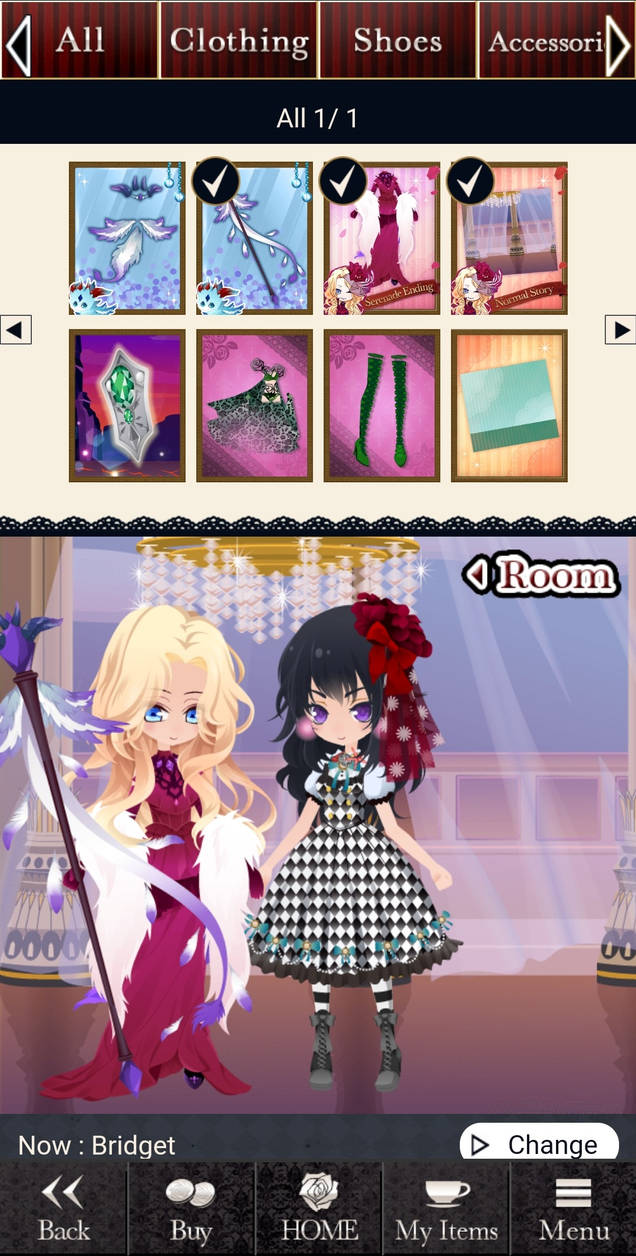
Of course, the are minor prices in the events that you can get to just by playing consistently and one of the Blood in Roses’ features I actually like comes into play here too – you can get a lot of minor bonuses, like extra diamonds for events, extra energy for Miss Rose Contest and faster story ticket recovery by watching ads. This is something I consider a much more reasonable option that just asking you to pay up, but it hardly changes the predatory nature of all the game’s core features. In this topic, I should probably quickly go through the avatar system, which lets you equip items you get from mandatory Love Challenge purchases, the events, the "Make a Date” gacha (another thing that is fuelled mostly by the Miss Rose Contest, as every 5-win streak will award you tokens for the gacha machine) and unreasonably-expensive premium gachas. For a non-paying player this is another source of frustration, as while there’s a number of cool items you can buy for Tokens, if you also want to read the story consistently, you’ll pretty much never have any extra ones to buy an item you actually want, rather than the ones you need to progress through the roadblocks. Also, there’s a pretty strict limit on how many avatar items you can own, possible to expand through pricey consumables – another limitation that seems to have little purpose other than making you pay up If you’re not lucky enough to earn those from events or gacha and you run out of space.
                In the end, literally everything in Blood in Roses is an aggressive, meticulously-crafted scheme to extort money from the player. The depth of predatory monetisation is so severe that I have a hard time to consider it a game, or especially a visual novel – it’s a scam disguised as one. It might look and sound decent-enough at first, but quickly shows its ugly face of a cynical money-making machine that puts manipulating the played into spending money over any kind of fun or creative integrity. While the daily routine of interacting with the game might not be wholly-unenjoyable, I find what it truly represents nothing short of disgusting, mostly because it’s not an isolated case, but simply an iteration of NTT Solmare’s utterly corrupt business model. This is mobile gaming at its absolute worst and a gross bastardisation of the visual novel formula – if you care about our niche at all, otome and beyond, please don’t support this company and other ones utilizing similar practices. They don’t deserve it.


Final Rating: 1,5/5

Pros:
+ The art isn’t bad
+ Most routes have their moments
 
Cons:
- All-around despicable business model
- Overly simplistic, tacked-on gameplay mechanics
- Clunky UI that makes daily tasks an absolute chore
- Ultimately shallow storytelling
 

VNDB Page
(Please don’t) play Shall We Date? Blood in Roses+ for free on Android or iOS

Saturday, 10 August 2019

Fuwanovel Revitalisation Efforts & my The Language of Love review


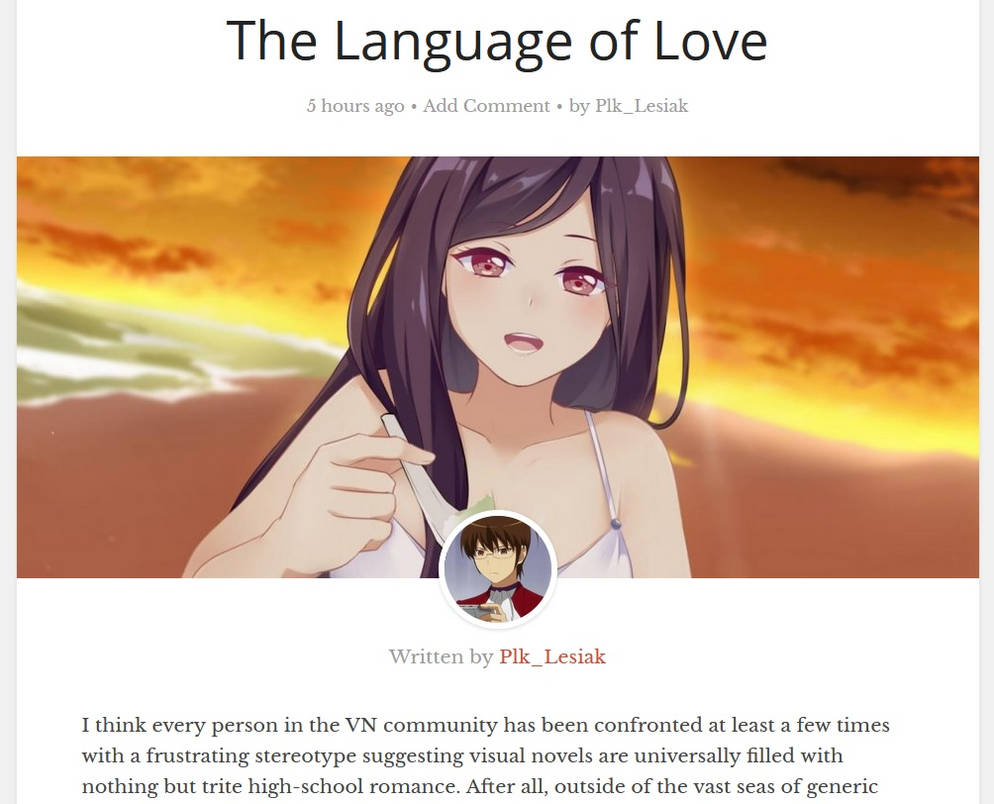
Today there's a thing happening that is probably pretty minor in anyone else's eyes, but feels quite huge to me: my review of ebi-hime's The Language of Love is being published on Fuwanovel main site as my first contribution there. It is also the first review to go up in the Review Hub after the leadership changes and attempts to revitalize the site started a bit over a month ago. While I'm a latecomer when it goes to the VN community, Fuwanovel played a massive role in my involvement with it, with discussions on the Forums and people I met there being a constant source of fun, information and motivation to pursue this hobby further. It is the Fuwa Forums where this blog originated from and where I've spent a decent portion of my time and energy in the past two years. 

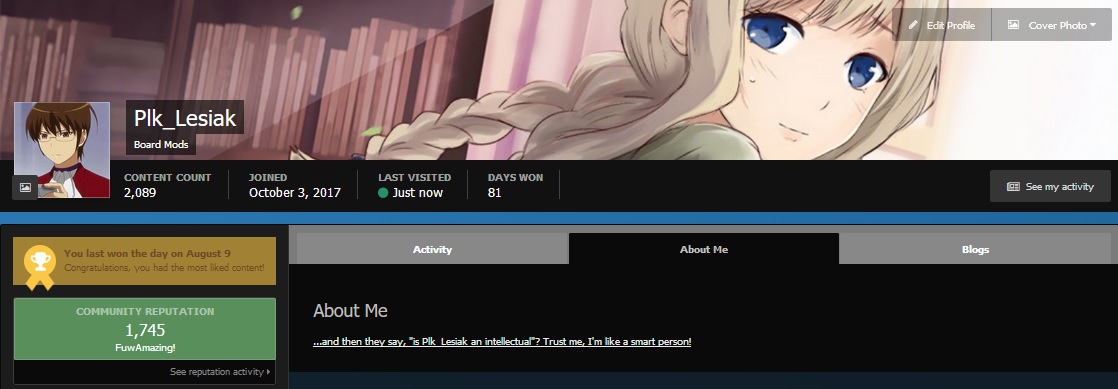
From early 2017, I was consistently one of the most active people in the Fuwanovel community, sharing the anguish of others seeing the site die due to its owner's absence. This was all happening despite the presence of many people willing to work on giving the site a new life – whatever our initiatives tried to achieve, always ended up crashing on the barrier of not having access to the main site and the impossibility of getting anything from the admins. After a few months of trying, even I simply had to accept that Fuwa is a sinking ship and there's quite likely nothing I'll be even able to do about it.

My Fuwanovel Forums stats clearly show that I've spent way more time there than should reasonably allowed...

I'll not get into the specifics of Fuwa's internal drama, because it's neither important nor it'd be in good tone to share any of that. There's a much more important thing I want to say: for the first time in literal years, Fuwa is making steps towards recovery. And while I'm hoping to keep doing my part in the foreseeable future, there's something the site needs more of in order to survive: contributors. Fuwa was always a community, but also a fan site that offered something interesting and useful for anyone willing to visit it from time to time. Was it VNTS, the review hub, news articles... This usefulness was completely lost of the last period of the site being dead, and is something we need to reclaim.

If you think there's something you could offer to Fuwa's main site, check out this recruitment post or try visiting our Discord and asking around. We don't expect anyone to overwork themselves for us, or contribute stuff on any fixed schedule. We don't pay for content, as no one is making money from the site. We just want to keep this community alive and share our love for VNs. And if you think that is something worth helping with and decide to join us in this project, we'll be forever grateful for it.

And as always, thank you very much for following my work and I hope you’ll enjoy the review! If everything goes according to plans, that’s not the last one I’m putting there.