Showing posts with label review. Show all posts

Saturday, 12 September 2020

The Fairy's Song Review (Yuri Visual Novel)

The last time we talked about a “modern fairy tale” VN with a yuri spin to it, it was a very special one – Studio Elan’s Heart of the Woods, which I confidently gave my first and, so far, only 5/5 rating. The way it mixed relatable, modern characters with an emotional fantastical plot resulted in an experience in many ways unmatched within the EVN scene. It also showed the huge potential of this formula, handling the clash between mundane and supernatural in a different way than typical fantasy or horror stories. Today we’ll be looking at a game that took similar themes and utilized them a more low-key, light-hearted way – ebi hime’s newest yuri VN, The Fairy’s Song.

                Released on Steam and Itch.io early August 2020, this project is a slight departure from ebi’s usual, angst-filled storytelling, focusing more on cute romance and comedy. Fairly similar in tone to 2016’s Strawberry Vinegar, which also combined modern-day slice of life story and supernatural elements, it plays on classic themes of knights, monsters, magic and sleeping beauties, but puts them in a configuration that gives the whole setup a very different meaning… Which doesn’t necessarily mean The Fairy’s Song manages to offer many surprises or that it feels particularly fresh in how it utilizes those tropes and story elements. But why is that exactly, and is it really a bad thing?

But have they really…? There is certain sloppiness to The Fairy’s Song's lore and the overarching fantasy plot, but thankfully it can’t overshadow the charm of the characters and the yuri romance

The Fairy’s Song's protagonist is Marnie, a goth teenager who tries to make up for her small stature and naturally cute looks with dark clothes and a (slightly) mean attitude. We meet her when she’s being dropped to her grandmother’s house in a small, remote village, quite unhappy with the time she’ll have to spend there while her parents travel abroad. Her grumpiness is only strengthened by the fact her grandmother, struggling after the death of her husband a year earlier, is a shadow of her former self – not just frail and weighted by her loss, but also disturbing her family with frequent talk of fairies and other magical phenomena supposedly present in the surrounding forests. However, what was meant to be a boring and depressing stay is turned on its head when Marnie ignores her grandmother’s warnings and walks deep into the forest. There, she is confronted with several inexplicable events, but most importantly, she discovers an unconscious girl dressed like a knight – Leofe, who apparently spent centuries sleeping in the enchanted grove and is now determined to repay Marnie for waking her up.

                The story from this point is slightly messy and strangely-paced but also has quite a lot of charm. The fantasy subplot suffers from a few inconsistencies (like Leofe claiming her magic comes from the forest’s fairies and later describing them as untrustworthy and hostile to humans) and rather predictable mystery elements. Its interplay with the slice-of-life moments also leave a little bit to be desired – the premise would make you expect the main couple spending quite a lot of time in the enchanted forest encountering various magical phenomena, but those moments were few and far between and felt a bit disjointed from the mundane drama. This mild sloppiness and lack of dedication to the theme felt uncharacteristic for ebi’s writing, but thankfully the story worked much better in the most crucial departments: the characters and the relationship between Marnie and Leofe.

…also, at no point fairies show up on screen and there’s no trace of the titular fairy songs, but there’s enough fay magic and enchanted woods in the story that you’re unlikely to feel cheated

Marnie represents the angsty teenager archetype that can easily become irritating, but she is actually a nicely balanced character, with enough self-awareness and compassion to never become off-putting. Her fierce attitude also makes her adapt pretty quickly even in extreme circumstances, which comes in handy a few times when she encounters supernatural dangers. She does not change much during the story, her attitude softening rather in response to specific circumstances than due to some internal epiphany, but she’s compelling enough as a character for that not to be a problem. Leofe, even outside of a few secrets and plot twists she’s involved in, is an interesting character that only over time I fully appreciated. Her over-the-top, knightly persona and constantly-declared devotion to Marnie might feel absurd at first, but the role of that facade becomes more understandable later on. Stranded in an unfamiliar world, one in which she has no place to call her own, falling back to her ambition of being a knight is a defence mechanism that she initially relies on to keep on going. As her relationship with Marnie deepens, we can see her attitude and mannerisms becoming more natural – this aspect of both girls gradually lowering their defences and becoming honest with each other is one of the most compelling aspects of the whole VN. A lot of good can also be said about the supporting cast, particularly Marnie’s family. Her parents have fun personality quirks that make them believable and fairly defined despite their limited screentime. Her grandmother is a little bit more one-note (same can be said to characters connected to Leofe/the enchanted forest), but full of warmth and she supports Marnie in crucial moments of the story, which makes her plenty likeable.

                Then, there’s the yuri relationship itself, which includes choices that may or may not be to your taste. While the game is fully kinetic and ends on a very positive note, it doesn’t go very far in developing the love story, as the girls end up still slightly uncertain about their feelings and what their future will look like. There’s also no epilogue that shows them being together, which is a bit of a wasted opportunity in a story that is in large part about finding a place for oneself in an alien world. Just a little glimpse to how Leofe was going to adapt would be very satisfying. Overall, there are enough cute moments and kisses to satisfy most yuri fans, but I hoped for something a bit more conclusive. The game also mostly avoids explicit LGBT themes – while Leofe’s past as a girl going against social norms and striving to become a knight has a clear feminist/empowerment angle to it, neither hers nor Marnie’s attraction to women is ever elaborated upon. While I know some readers prefer things to be this way, for me at least acknowledging the issue makes the story more immersive, so I wish the game was at least a little bit less vague.

In a major way, The Fairy’s Song is also a tale of waking up in an unfamiliar world and trying to find a place for oneself – with all the troubling and ultimately-heartwarming implications

The game’s visuals are kept relatively close to standard anime art and they are overall very cute and colourful, setting an appropriately light tone. The level of detail didn’t amaze me at any point, but the character art, backgrounds and UI are all nicely stylized and fit together very well, creating an overall very pleasing effect. Music caught my interests a bit more, as it mixed typical slice-of-life VN ambient tunes with more dynamic ones reminiscent of JRPG soundtracks. The switches in style complemented the transitions between more mundane and more adventure-filled segments of the story – a choice that felt well thought out and deliberate, which is not necessarily true with most EVN soundtracks. Generally, the VN left nothing to complain about from the technical standpoint, a few typos scattered throughout the story being the biggest issue I can think of – and even those were relatively few and far between.

                So, do I recommend buying and reading The Fairy's Song? Generally speaking, yes, but it's also not an offering that will completely satisfy fans of ebi's usual storytelling, or those seeking for a cohesive and engaging plot. With how casual the flow of this VN was and with some of the quirks in its art reminding me of Winged Cloud's Inma Ruiz's work, I sometimes couldn't suppress the feeling like I'm reading clean, better written fragments of a Sakura game. Personally, I'm all for that kind of low-brow fun, as I can easily get past some messy plotlines and enjoy cheesy romantic moments, but you need to adjust your expectations properly to not feel at least a bit disappointed approaching such a game. The Fairy's Song will occasionally ask you to embrace its silliness and go along with a few overly-convenient plotpoints, but if you're able to do that much and if you enjoy cute yuri romance, you'll have tons of fun with it.


Final Rating: 3,5/5


Pros:

+ Fun main couple with good chemistry

+ Lovely visuals

+ Good soundtrack


Cons:

– Mild inconsistencies in the game’s writing

– Very standard plot that adds nothing fresh to the formula


VNDB Page

Buy The Fairy’s Song on Steam or Itch.io

Saturday, 29 August 2020

Synergia Review (Yuri Visual Novel)

Have you seen Blade Runner 2049? The cyberpunk epic that charms the viewer with its climate and polished visuals, but is probably a bit too convoluted for its own good and offers relatively little payoff for its massive, multi-layered plot? Now, imagine watching that movie without the context of original Blade Runner and accompanying shorts, all offering crucial pieces of worldbuilding and linking the main entries in the franchise together. How much meaning the sequel would lose and how hard to follow some of its subplots would be?

                This “Blade Runner 2049 without context” metaphor is the best way to explain my feelings about Synergia, the long-anticipated cyberpunk EVN by Radi Art. First announced in mid-2017, the project gathered a lot of attention with its well-defined, gloomy aesthetic and an appealing story outline. After that, it went through a number of hiatuses, with the creator behind it often going silent for long months and many assuming the project was dead. In mid-2019, however, the full development of the game was resumed and after a successful Kickstarter campaign (and another series of delays), we finally received a finished product in August 2020 – one that, in my opinion, proved way less mystery-filled and more flawed than the promotional materials made us hope for. But why is that exactly and to is this game actually bad, or just not living up to the hype?

The few characters central to the Synergia’s plot showed great promise, however, most of them remained relatively unexplored and their stories left without closure

Synergia tells the story of Cila, a police operative and negotiator specialized in dealing with androids, living on a far-future, desert-covered colony planet. Serving as a private contractor to the oppressive imperial government, the dominant polity of the unnamed world, she’s depressed and demotivated, barely managing to fulfil her duties despite being highly-trained and skilful in dealing with both AI and augmented humans. Soon after the game's start, however, her apathetic routine is broken when her best friend Yoko, a shady android merchant and gang leader, gifts her a replacement to her recently-defunct companion android. The new robot, Mara, seems incredibly advanced and human-like – arguably more human than the repressed and corrupt population of the imperial capital – and astonished Cila with her unpredictable and independent behaviour. Soon her unclear origins and level of intelligence, suggesting the use of illegal forms of AI, become signs of trouble, which Cila is unsure how to deal with. However, even she does not expect the real depth of the conspiracy and the significance the android might have to the future of her country (and, possibly, the whole colony).

                While this setup sounds both fairly typical for cyberpunk fiction and decently complex, the way the VN approaches exploring its story is pretty unique and depending on your interpretation can be considered either minimalistic or plain lacklustre. With just a bunch of characters dominating the plot, extremely limited use of exposition and very few opportunities to explore the setting in any significant fashion, we get a core story that is largely suspended in a narrative void. Crucial elements of the plot like Cila’s past traumas and broken career within imperial special forces are very shallowly explored, while other central characters, like Yoko, barely get any development at all. I’m all for subtle storytelling and natural presentation of background information, but Synergia just gives the reader way too little to work with. The way the world is presented is even more cryptic, with some contextual information present (like web articles and messages occasionally showing up when you use computer interfaces), but not enough to get a cohesive sense of the setting. The Empire in particular, while its presence is talked about a lot in the game, is never showed much or interacted with in a manner that would justify its menacing reputation. This might be less of a problem to some readers, but for me exploring interesting visions of the future is a huge part of the appeal of cyberpunk as a genre and Synergia underdelivers heavily in this regard.

The game’s red and blue-tinted, neon aesthetic was one of its major draws and the final art do not disappoint – that is unless you find the heavily-skewed color pallet jarring

Then there’s the pacing and overarching intrigue related to Mara which are not bad, but also not spectacular. The game is relatively lacking when it goes to tension and sense of danger. Fights or confrontations are few and far between and Cila is barely ever put in real danger, which is kind of out-of-place considering her perilous line of work and the powers she’s working against in the latter half of the story. There’s also a very real lack of story development around the midpoint of the plot, before the game branches out to “good” and “bad” route (the difference in tone between them is not as huge as those labels would suggest, with “bad” ending being more of a “neutral” one). Particularly, this is the portion when the romance between Mara and Cila should be given time to grow and gain meaning, but that’s simply impossible within the brief segment between the main intrigue being established and the final act kicking in. This makes even the yuri aspect of the game feel underdeveloped – also because we learn very little about the “mechanophilia” incident from Cila’s past, one that could give more depth to her character, her feeling for Mara and even the overall setting, as her tragic "love affair" with an adroid had serious repercussions for the whole Empire.

                The resolution of the mystery plot, involving Mara’s origins and the significance of her existence, was quite imaginative, but some parts of it were also pretty contrived and unconvincing. Synergia’s promotional materials were giving a vibe of outlandish conspiracies and, possibly, deeper transhumanist themes, while the game itself was trying to build tension with a mysterious countdown to the “Synergia incident”. The real resolution of the plot was hardly that spectacular and Cila’s role in it somewhat irrelevant – whenever she has significance for the overarching story, it’s because of what other characters want from her or because of something she did in the past (and the game never shows those events, just briefly references them). While her initial apathy is explained in the plot, she’s the kind of protagonist I really don’t like in VNs – it’s fine for MC’s influence and agency to be realistically limited, but here they’re not only being tagged along by greater powers, their most interesting moments are also delegated to the vague backstory. This doesn’t make Cila a bad or unappealing character, but a poorly-utilized one – exactly because she’s a genuine badass that should get more than two or three scenes taking lead.

The game’s red and blue-tinted, neon aesthetic was one of its major draws and the final art do not disappoint – that is unless you find the heavily-skewed color pallet jarring

From this you could probably get the feeling that I disliked Synergia or that it’s an overall poor experience, but that’s not the case. The major elements boosting its enjoyment factor are definitely the art and music. Visuals are highly-stylized, with a dark and distinct colour pallet that boosts the gloomy and oppressive feeling of the setting. While sprites and CGs are relatively simple when it goes to the level of details, they look appealing and very in-line with the cyberpunk formula. The soundtrack is exactly the kind of electronic ambience music you would hope for in a game like this and I enjoyed it a lot. At the same time, it always stayed comfortably in the background, without even threatening to distract me from the reading (which is exactly how I like things to work). Before I conclude the review, however, I also have to mention another important problem of Synergia: the English script is weighted down by spelling mistakes and occasional awkward phrasing. These issues weren’t massive, but visible enough even for a non-native speaker such as me, so take them into consideration.

                So, what’s my ultimate take on Synergia? Despite all the complaining I did, the issues I write about were not something that could ruin my experience, but rather areas where I saw clear wasted potential. The game tried to tell a complex story but did not take the time (it's 6-7 hours of content) and attention to detail necessary to fully immerse the reader. I could much more easily look past the main intrigue not blowing me away if the game’s world and main characters felt alive and decently fleshed out, but they always fell short of that threshold. The result is a game that is fun enough to follow for fans of the genre, but one that never manages to rise above purely average levels. Maybe the free story DLC promised by the author will do something to give the experience some real depth, but for now, I can only recommend Synergia to people who’re particularly fond of the cyberpunk aesthetic and themes – while it hardly adds something new to the formula, it’s a decent enough iteration of it, especially on the relatively-barren landscape of cyberpunk VNs. And if the author decides to expand this universe, it can still hold a lot of promise – the foundation is solid, it just needs a lot more substance on top of it to truly shine.


Final Rating: 2,5/5


Pros:

+ Great cyberpunk aesthetic

+ Climatic soundtrack


Cons:

– Weak worldbuilding

– Underdeveloped/underexplored characters

– Average-at-best main intrigue and mysteries


VNDB Page

Buy Synergia on Steam or Itch.io

Saturday, 8 August 2020

Stellaren II Review (English Original Visual Novel)

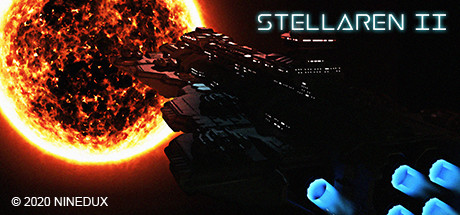
 header.jpg?t=1595524444

Stellaren, released exclusively to mobile devices in 2017 was an important game in my engagement with VNs. A dark sci-fi adventure with a captivating setting and a tense, at times brutal story stood out significantly from most other visual novels available for smartphones and I think to this day is one of the best dedicated Android/iOS games of its kind [you can find my detailed review of it here]. It also cemented my love for VNs as a storytelling formula and while some of that infatuation was definitely connected to me being a fairly inexperienced reader, many elements of Stellaren’s worldbuilding and character development are genuinely bold and interesting – and to the point where I wasn't even bothered by its rough edges and clunky gameplay elements.

                Because of all this, it is an understatement to say I was excited to hear about the release of Stellaren II July this year, coming out not only for mobile devices but also on Steam. Promising heavily updated visuals, a set of better-polished gameplay elements and a substantial, conclusive story (its predecessors had a tendency to end on cliffhangers), it seemed like a massive treat for someone like myself, already in love with this universe. What I found was both different and more complex than I expected – but did it capture the charm and stomach-gripping qualities of the original?

screen-1.jpg?fakeurl=1&type=.jpg
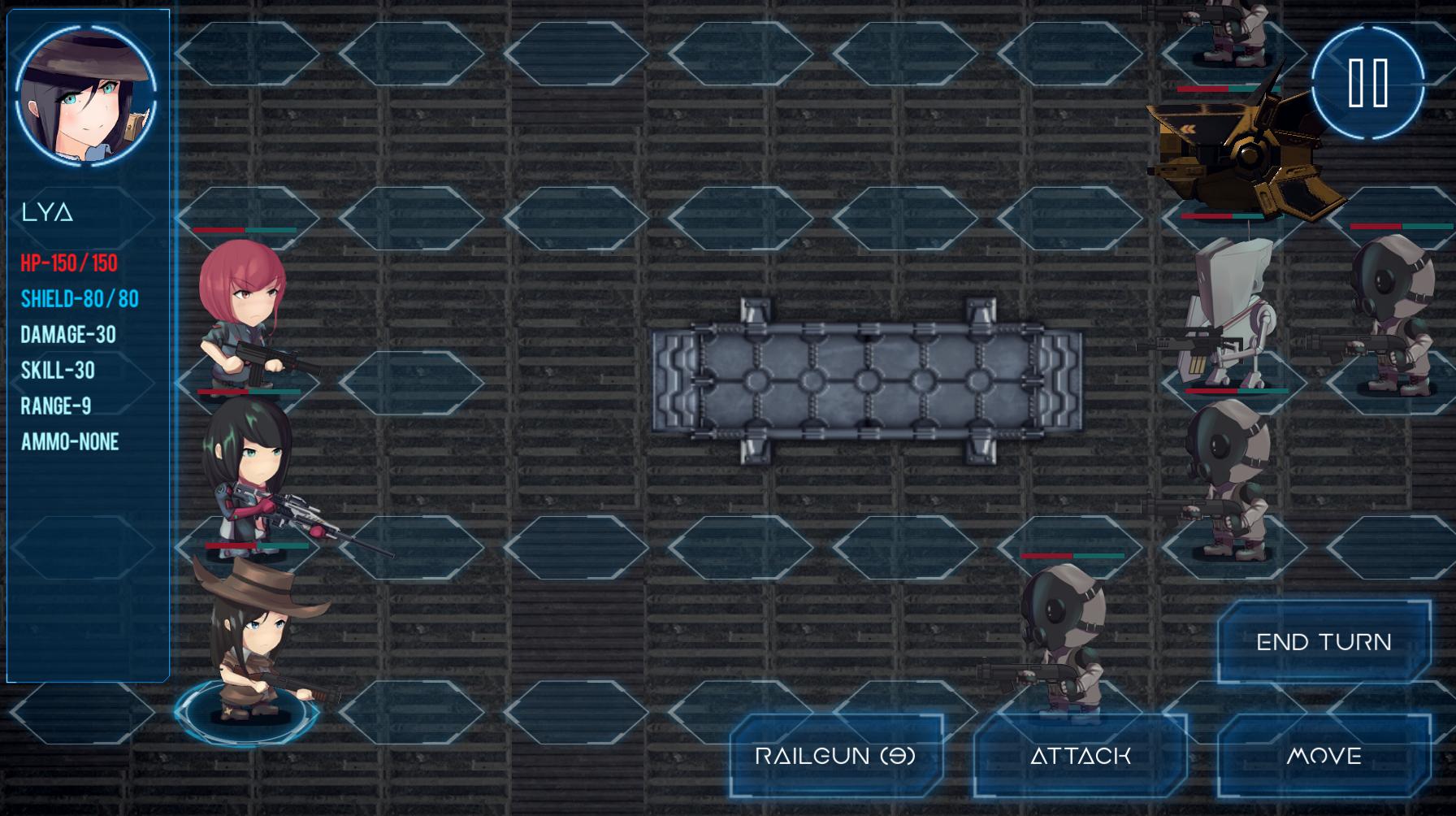
Stellaren II minigames are a massive step up in quality over the first game, and mostly skippable if they turn out not to your taste

Stellaren series is set in far future, where humanity is a space-faring civilisation mostly united under the Neo Galactic Conglomerate – an Earth-based government that manages numerous colonies with an authoritarian and exploitative approach, treating its inhabitants like second-class citizens. A few centuries back this injustice led to a civil war, ultimately won by Earth, while the breakaway faction, the Colonial Rebel Forces, established a ragtag domain composed of most remote human colonies. Over this background, the original game tells the story of M., a junk merchant scraping by on an impoverished planet by scamming NGC pilots. A sequence of unpredictable events gets him trapped on an NGC warship and involved in what would soon become a massive galactic conflict, with the stakes being the survival of mankind as a whole. I don’t want to go any deeper into the lore of the games, as I strongly recommend checking out the first Stellaren – something not necessary to enjoy the sequel (it recounts the most important plot points and most of the crucial lore), but worthwhile by the original game’s own merit.

                Stellaren II is set in the aftermath of the aforementioned conflict, on a remote and relatively isolated mining colony of Horus. It follows a blank-slate protagonist whose neural implants were hacked, forcing him to take part in a brutal rampage in the colony’s starport and wiping out all his memories. With few clues on his identity and past, he ends up working with two detectives investigating the murders: Lana and Rene, private contractors for the Weber Corporation, a powerful conglomerate that is the de-facto ruling power of the colony. Similarly to M’s story, during the 10+ hours experience this initial intrigue gradually escalates to galaxy-altering proportions, eventually linking with the plot of the prequels and giving conclusion to the overarching storyline of the series.

                All that being said, here comes my first issue with Stellaren II – while it works heavily to be a worthy conclusion for the main story of the whole saga, its most enjoyable moments are still connected to the initial 2/5 of the experience, happening on Horus. The two heroines that define this portion, aforementioned Lana and Rene, are interesting and well-developed, and after the game moves to space to pursue its grand narrative, they mostly move to the background, while other characters become the focus – particularly Len, the mysterious ex-NCG operative who appears in the colony following her own agenda and forms an alliance of convenience with the protagonist and his companions. At this point, the game also opens up with a space-travelling interface and several interesting locales, but in my opinion it never manages to recapture the good pacing and emotional impact of the initial chapters.

stlrn_1_by_szafalesiaka_de2r7rm-pre.jpg?token=eyJ0eXAiOiJKV1QiLCJhbGciOiJIUzI1NiJ9.eyJzdWIiOiJ1cm46YXBwOiIsImlzcyI6InVybjphcHA6Iiwib2JqIjpbW3siaGVpZ2h0IjoiPD03MjAiLCJwYXRoIjoiXC9mXC9hOGI4ODM1NS1jOGM3LTRiMTYtOGE3YS00YWE5ZmMxYjA0ZmZcL2RlMnI3cm0tNmJhYmQ0ODUtZjQ5Mi00ODNhLWI5MGQtZWNjZmE4MDhhZGQ2LnBuZyIsIndpZHRoIjoiPD0xMjgwIn1dXSwiYXVkIjpbInVybjpzZXJ2aWNlOmltYWdlLm9wZXJhdGlvbnMiXX0.NZHW3AF-IE79Adk0h_YvzuZ2XOZknO14v9fJXk0Tt0Q
Who the protagonist is to one of the heroines… While the general tone of the story is dark and often brutal, the game offers enough humour and colourful personalities to never feel overly depressing

The next problem of Stellaren II is the sheer complexity of its story, combined with an unusual structure of the experience (at least partially connected to it being a Unity game, rather than one using a dedicated VN engine). With saving only possible at the beginning of every (often substantial) scene, a massive number of choices and an extensive affection system tracking your relationship with over 10 characters, it’s easy to get lost in all the options available to you. What makes it even worse is that the actual goals and consequences for affection building are obscured and nearly impossible to get right on your first playthrough. Often one slip-up can cost you the life of your preferred heroine and deprive you of the ending you wanted, with little to no indication on what you did wrong, or whether an alternative outcome was even possible (there are only two endings currently implemented, but more are being developed). In practice, you’ll likely have to finish the game once getting a default (Len’s) ending and then study the game’s wiki to get any other result – a problem not unheard of in VNs, but hardly an optimal situation.

                All those issues, however, can’t nullify the main strength of the game, that is its writing and worldbuilding. The post-war galaxy it presents is a brutal and chaotic place, with suffering and death ever-present. More importantly, Stellaren II is not afraid to make even its most important characters vulnerable and always handles their (either potential or inevitable) demise in meaningful ways. Every tragedy visibly impacts the protagonist and those around him, but at the same time they cannot give up on their mission, with stakes only rising as the time goes on. The occasional game over screens add to the feeling of vulnerability – the protagonist and his allies are routinely confronted with enemies they have very limited means of fighting against and the game makes it explicit that every bad move might be their last. At the same time, this dark picture is being offset by cleverly-written character interactions and humour, showing that the cast is making the best of their circumstances and adapt to the harshness of their world. Even in my initial playthrough, when I failed to avoid any of the “optional” character deaths, the ultimate message of the story felt hopeful rather than depressing.

                Two areas of the game’s story I found fairly weak are the protagonist and the villains. The lead character is explicitly a blank slate and while we later learn a few things about his past, he does not have the backstory and compelling character arc of M. from the first game. It’s even something of a recurring joke that characters question the reasons for him being included in some events and his connection to the heroines, even though he eventually proves himself as a valuable member of the team. The one positive is that he’s not a harem protagonist who wins every girl’s heart for no reason – the romantic tension in the game is very low-key and mostly shows up if you really push for it with your choices. The antagonists, while properly menacing, lack depth. The main threat throughout the story, a homicidal clone called X2, is simply pure evil, murdering and torturing people without remorse and with somewhat unclear motivations. What’s worse, this is in stark contrast with the character she was created from, the rebel commander X. who served as the initial antagonist of the original Stellaren – someone who might’ve, at first, seemed like a sadistic monster, but showed a lot of nuance and conviction later down the line. The pirate lord Roto, on whom the mid-section of the game is focused, is hardly better, for the most part just feeling cartoonishly vile. Even the broader antagonistic factions, like the Horus' terrorist group called the Butchers could've easily been more compelling, instead of just serving as cannon fodder for battle minigames – particularly because the Weber Corporation they fight against is hardly a benevolent, moral institution.

stlrn_2_by_szafalesiaka_de2r7rc-pre.jpg?token=eyJ0eXAiOiJKV1QiLCJhbGciOiJIUzI1NiJ9.eyJzdWIiOiJ1cm46YXBwOiIsImlzcyI6InVybjphcHA6Iiwib2JqIjpbW3siaGVpZ2h0IjoiPD03MTYiLCJwYXRoIjoiXC9mXC9hOGI4ODM1NS1jOGM3LTRiMTYtOGE3YS00YWE5ZmMxYjA0ZmZcL2RlMnI3cmMtMDU4YjMwYjgtYzhlOC00YTJjLWJlODYtODBkOWUxODg5ZTQyLnBuZyIsIndpZHRoIjoiPD0xMjgwIn1dXSwiYXVkIjpbInVybjpzZXJ2aWNlOmltYWdlLm9wZXJhdGlvbnMiXX0.7sEp8YwqZzo6pNb2R9rP2-yCIu9u09Ui8plKK5qKrcM
Their returning characters and conclusion to the Stellaren’s overarching story should satisfy fans of the series, although the initial chapters on the planet Horus are still the best parts of the sequel... And yeah, we still don't know what those one-letter names are about

Minigames were always a crucial part of the Stellaren experience, particularly with space battles thematically integrated into story segments. Outside of the starfighter sections (this time in the form of a shoot 'em up), the sequel includes tactical ground battles and a real-time infiltration minigame. When it comes to the level of polish they definitely go above the clunky dogfighting from the original, but are still fairly simple. They are also, outside of the infiltrations, fully skippable, making the experience of replaying the game for alternative story paths, or simply for those only interested in the VN content, less painful than it could've otherwise been. At the same time, the one unskippable minigame still gets in the way on new playthroughs, while the ground battles felt very dull to me, with stiff mechanics and snail-paced combat. Even the power-ups bought with credits awarded for winning encounters are simply passive bonuses, offering little in terms of customisation and giving a weak sense of progression. Generally, the minigames were neither a negative nor a major positive in my experience, but I also generally prefer my VNs keeping their focus on the story. One other mechanic worth mentioning is timed choices, showing up in more dramatic portions of the story and often associated with game-overs. My feelings are often mixed on such gimmicks, but here they never overstayed their welcome or became frustrating with their difficulty, while also conveying pretty well the dynamism of some scenes.

                When it goes to the visuals, the game is a major step up in comparison to its prequel, with detailed sprites (including some poses and clothing variants) and a good number of dedicated illustrations, both full CGs and simpler lineart spicing up the crucial moments of the story. Backgrounds are still a mix of 2D art and edited photos, but their quality and tone feels a lot more consistent than in the first game – the original Stellaren took many shortcuts which were possible to ignore when playing on a smartphone, but the sequel avoids such jarring dips in quality or mismatched assets, giving a solid impression even on a large PC monitor. The soundtrack, while mostly composed of stock music, is very consistent with dark sci-fi theme and generally supports the tone of the story very well.

                So, what is my conclusion on Stellaren II? Among mobile-oriented VNs it's still among the best things available, with a compelling story, good production quality and none of the exploitative business model you usually find on smartphone apps (and mobile VNs, curiously enough, are often among the most despicable examples of unethical monetisation and bastardisation of the source formula into a money extortion scheme, with things like CGs, choices or even progressing the story being routinely paywalled). Particularly for fans of the dark sci-fi stories it should be a treat on whatever platform they choose to play it (at least when the paid "pro" version hits the mobile stores – the free one include adds and doens't let you skip combat). On the other hand, some of the elements that made me fall in love with the original Stellaren, like the moral ambiguity of major factions, compelling growth for the protagonist and surprising character development are less present this time around. As a result, the game was both more and less than I hoped for. Despite that, I feel no hesitation to recommend this series to anyone who isn't allergic to gameplay elements and various quirks typical for VNs created in not-dedicated game engines (i.e. missing options and quality of life features). Particularly for the low price of $4, it's a great value proposition and if any of the themes and storytelling techniques I've described in my review appeal to you, you should consider giving Stellaren II a chance. Hopefully, we'll get more smartphone VNs of this quality in the future.


Final Rating: 3,5/5


Pros:

+ Interesting, dark sci-fi setting

+ Well-paced, tense main story

+ Large cast of memorable characters


Cons:

– Fairly weak minigames

– Confusing affection system

– Weak antagonists


VNDB Page

Buy Stellaren II on Steam or play it on Android and iOS

Saturday, 4 July 2020

Eldritch University Review (Yuri Visual Novel)

Note: I was provided with a free review copy of the game by the developer. All opinions are solely my own.

Sequels to obscure, low budget EVNs are always a slightly awkward topic to tackle. They are inevitably tied to games which few people are familiar with and which can be, at least in some aspects, of subpar quality simply due to their indie nature. This makes giving a meaningful rating and recommendation for potential readers tricky – at the very least, any kind of conclusion about them will be served with a good number of caveats, related to the interplay between titles in the particular series and the value proposition they represent both together and on their own. The latest title to create such a conundrum for me is Eldritch University by Jackkel Dragon.

                Released on Steam in June 2020, this game is a sequel to early 2019’s Eldritch Academy, a supernatural horror VN combined with a fair dosage of high-school yuri romance. While amusing in its romantic arcs, the prequel had several issues: unlikeable protagonist, repetitive routes, below-average visual and, in my opinion, an unreasonably high price for the level of quality it represented. University, while borrowing the setting and tying itself loosely to the core intrigue of that game, represents a major improvement in most aspects – a better-looking, more focused experience with a price tag way more representative of its entertainment value. Is it, however, good enough to make the whole series worth it, or to be a viable read as a standalone experience? Well, it depends on what you want from it…

The troubled relationship between the protagonist and her girlfriend is the most interesting part of the game – and the most satisfying, when you finally see them succeed

Eldritch University follows the story of Kasumi, a college freshman that was recently reconnected with Misaki, the girlfriend she was separated from three years earlier. A secondary character from Eldritch Academy, Kasumi was the person who unwittingly unleashed the supernatural threat that game's story revolved around and nearly got killed in the process. Still bearing some emotional scars from the incident, she was mostly able to regain her easy-going attitude and is happy to work on rebuilding her relationship with Misaki. However, when the wound she sustained back then starts giving off strange symptoms, and creepy stories of apparitions begin popping out around the campus and the surrounding town, it becomes clear that the horror is far from being over.

                I won’t try to hide it: if there’s one thing I deeply enjoyed about Eldritch University it is the love story between Kasumi and Misaki and the way it is tied with the overarching supernatural intrigue. Initially, Kasumi herself is a bit of a bubbly airhead, while Misaki is more timid, but also kind and friendly. As, in the prequel, we briefly observe the couple in their high school days, they are outgoing and over-the-top affectionate to each other. However, the circumstances of their separation (forced by Misaki’s conservative mother) and the time they spend apart change that significantly. Misaki’s is weighed down by the social stigma and rejection she suffered due to being a lesbian, while Kasumi struggles to adapt to her changed behaviour and the doubt on whether the connection they once had can be fully rebuilt. In both of the non-dead-end endings, this dynamic gets resolved in a satisfying and heart-warming fashion, while never overdoing the drama and keeping the emotional and psychological profiles of both girls very believable. Coupled with a romantic, non-explicit sex scene, this makes Eldritch University a real treat for yuri fans such as myself – I was genuinely surprised and impressed with how impactful it was.

The game’s supernatural story feels somewhat rushed and underdeveloped, but also avoids repetition and filler content that plagued Eldritch Academy

The horror intrigue is less developed and is probably the only aspect of the game which I would consider weaker than it was in Academy, which focused a lot on stress and desperation of fighting against a supernatural threat. It ties directly to the events of the first game and creates a few genuinely tense scenes, but its main value is, once more, in the well-executed interplay with the love story. The character most important for the horror arc, Kasumi’s friend Hinata, plays into her insecurities and confusion about Misaki’s behaviour – this leads to a few interesting choices influencing the main couple’s relationship. On the other hand, the are also blind choices with unpredictable consequences in horror scenes and the pacing of the whole mystery plot feels rushed. With frequent time skips and rapid story developments, the sense of looming danger and despair, for which the game was definitely aiming, is only half-there. Also, surprisingly little was added to the series' overall lore and worldbuilding – it neither showed anything truly new about its supernatural elements nor opened interesting story threads for possible continuation.

                Then we get to the issue of secondary characters, who can be hardly described as anything more than plot devices. Two girls helping the protagonist and Misaki, Yuri and Shizuka, are a tie-in from the author’s book, Shireishi, but without the extra context someone who read that would probably have, they’re simply exposition props. Other minor characters barely show any personality either – Kasumi’s other friend, Hiroshi, is probably the only meaningful one among them. And at last, there’s the issue of actual relevance of knowing Eldritch Academy, as the really important parts lay not in the main plot of that game, but in the unlockable bonus content – short episodes showing the circumstances of Kasumi and Misaki getting separated and the way they adapted to their new situation. They add weight to the drama of University, but hardly justify investing time (8-10 hours) and money ($12) in the prequel. Honestly, I would just prefer to see a recap of Eldritch Academy and the scenes expanding on Kasumi’s and Misaki’s stories in University, as a skippable prologue – it would make it much easier to recommend it not only to people familiar with the first game (or interested in reading it), but also those that want to jump straight into the sequel.

Outside of Kasumi’s two friends, Hinata and Hiroshi, the secondary characters in the game are more plot devices than anything else – and even these two receive relatively little development

The visuals are a clear improvement over Academy, but are still pretty basic. While the sprite designs look more clean and expressive than they did in the prequel, the low amount of detail and simple shading are still very much visible. CGs look solid most of the time, but are ultimately on the same level as the sprites and occasionally even struggle with perspective. The end effect is hardly an eye candy, but very serviceable. The same can be said about music, which… Exists. It’s a very generic set of background tunes, but never gets in the way or fails to match the climate of the scene, which is good enough in my mind.

                So, what’s my conclusion on Eldritch University? It’s a game that struggles a bit with its identity, stylising itself as a horror story but hardly committing to this theme. However, for yuri fans that enjoy a more grounded approach to LGBT+ issues, it has enough to offer to easily justify the $6 price tag (for 3-4 hours of content). Also, for people that enjoyed Eldritch Academy or specifically look for the combination of supernatural thriller and GxG romance, it should prove satisfying. For anyone else, it might be a much harder sell… But if anything I wrote here sounded interesting to you, I still suggest giving it a chance – if not for the full price, then at least grabbing it on sale. And if this dev’s work continues improving in this manner, their next game might be very easy to recommend, even to a broader audience.


Final Rating: 3/5


Pros:

+ Excellent romantic subplot

+ Likeable and well-developed main cast


Cons:

– Average-at-best visuals

– Rushed/underdeveloped supernatural horror storyline

– Underdeveloped secondary characters


VNDB Page

Buy Eldritch University on Steam or Itch.io

Friday, 19 June 2020

Nothing & Nowhere Review (English Original Visual Novel)


Note: I was provided with a review copy of the game by the developer.

To talk about the latest slice-of-life VN by ebi-hime, nothing & nowhere, we have to start in a less-than-obvious place. Nearly two years ago I made an overview ebi’s freeware games and one of the most memorable and unique of them was Lynne: a heavily stylized, pixelart horror game about a teenager crumbling under pressure from her dysfunctional family and societal expectations she's unable to truly meet. Full of suffocating atmosphere and visceral dream sequences, it is to this day one of the most effective horror experiences I’ve seen in the medium and one that ends on an abrupt, but appropriately disturbing note. Nothing & nowhere, while representing a completely different climate and stylistic, is basically an alternative timeline spin-off of that game, offering something probably every person that read Lynne wished for – some form of respite and hope for the future to the game’s tortured protagonist.

                Interestingly enough, after being released in mid-May 2020, nothing & nowhere was not marketed directly as a sequel or spin-off of Lynne. Even the Steam page only mentioned the connection at the very end of game’s description, suggesting it’s above all a standalone story, despite sharing the central character with its horror predecessor. In my experience, however, it was exactly that link, and the extra context being familiar with Lynne provided me with, that made the new game a truly worthwhile. More than that, I’m willing to argue it's likely be the same for most potential readers, for a few crucial reasons.

The mystery behind the main character’s appearance near Cora’s village is not particularly compelling (and nearly turned void if you read Lynne), but the real appeal of the story is her path to overcoming the persistent issues that made her escape her previous life

The core story of nothing & nowhere is a very slow-paced, nostalgic slice-of-life story, similar in feel and scope to one of the other recent titles by ebi, Rituals in the Dark. Through third-person narration, it presents the story of Cora, an eccentric writer living in a small village in rural England, and a mysterious girl she finds one morning on a local beach, exhausted and drenched from the cold, autumn rain. Assuming the Girl (that’s the only way she’s referred to for most of the game’s story) run from home, she decides to give her shelter, opening the story of their unusual and slightly strenuous cohabitation. The main axis of the story is about the Girl and her path to overcoming the depression and anxiety that drove her into running away from her previous life – however, her specific circumstances and motivation are not the only, and not the most interesting mystery. That honour undeniably goes to Cora – an extravagant and successful young woman, living a reclusive life in an old-fashioned cottage in the middle of nowhere. Always perfect in her appearance and borderline-boastful about her achievements, she gives few hints on what drove her to this lonely way of life. Even while her relationship with the Girl grows deeper, she reveals very little about her past and wittingly diverts any attempts at prying into it.

                Here, however, we’re already landing on the biggest issue I have with the game – the reveals, when they happen, are not as impactful as I hoped for and the path that leads to them have too few memorable moments. The dynamic between Cora and the Girl is pretty amusing, with Cora using her rhetorical skills and life experience to not only solve the “mystery” of the Girl’s presence in the remote village, but also steer her in a direction of overcoming her deep-seeded problems. Her patient and considerate attitude, hidden under a layer of teasing and caricatural self-confidence, is heartwarming and makes a great basis for a believable story of healing and finding a new path in life. However, especially combined with the Girl’s depressive passivity, it does not create many impactful scenes or spark genuinely interesting tension between the two women. This results in an experience most appropriate for people with a really high tolerance for relaxed slice-of-life content, with no real twists of shifts in pacing involved.

While the context of Lynne adds a lot of meaning to nothing & nowhere’s story, it also exposes its biggest weakness – lack of tension and few emotionally impactful moments

Here we come to the aforementioned connection with Lynne and its significance. The main reason I think it’s important, is because it gives a much deeper look into the Girl’s backstory and the suffering she went through, making her recovery way more meaningful and satisfying to see. Also, the epilogue is filled to brim with references that will mean relatively little to people not familiar with the previous game. At the same time, I can’t shake off the feeling that deeper crossover from Lynne’s storytelling devices and unsettling climate would make nothing & nowhere a more compelling experience. Referencing more directly the girl’s traumatic nightmares and intense suffering we saw in that game would make the process of overcoming them and Cora’s involvement a lot more engaging to follow. I respect the fact that was not the kind of story ebi wanted to tell and that’s at least one of the reasons she didn’t tie this game to Lynne so explicitly, but it makes me particularly worried about its viability as a standalone experience. Without the appeal of an alternative take on an already-known story, there’s not that much here to hook the average reader with – even romance, the most obvious magnet for a broader audience, is relegated to brief backstory section for Cora.

                On the other hand, what might draw people in, outside of the story details, is the art, high in quality and utilizing a distinct, non-anime artstyle. As usual with this kind of stylistic, I needed a bit of an adjustment period after approaching the VN and I’m still not sure how I feel about the eerie, doll-like look of Cora’s sprite. However, the general impression from the game’s visuals was definitely positive. The backgrounds were nicely detailed and all assets felt very consistent in style and level of detail. The CGs were few, less than 10 in total, but the minimalistic story hardly demanded more custom illustrations to fully get the message across… Although just the fact I can’t think of another scene I would like to see illustrated, other than maybe the last sequence of the epilogue, reinforces my point about the (relative) lack of memorable moments.

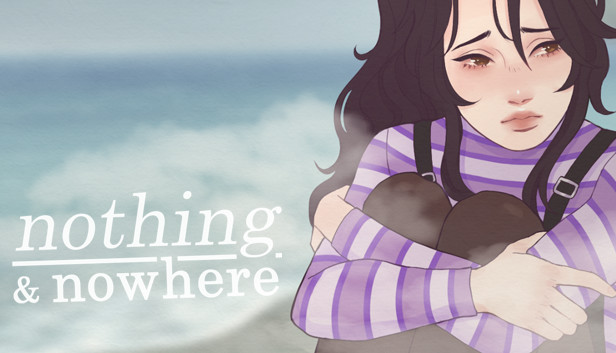
The non-anime art in nothing & nowhere has a peculiar, doll-like feel to it, but all the assets are unquestionably high-quality and very consistent in style

The last thing that has to be mentioned is the music – very relaxed and rather minimalistic, which puts it perfectly in-synch with the overall tone of the story. Generally, the cohesion between all layers of the experience in nothing & nowhere – story, art, GIU and music – was extremely high, which is something I deeply appreciate. I still, however, wished that the substance of it all was a bit more dynamic and hard-hitting. I’m tempted to say that the soul-crushing experience such as Lynne deserved a just as deeply uplifting sequel, but even disregarding that point, I simply feel this story idea demanded execution either longer and more in-depth, or more vivid and dramatic. Some will surely disagree with me, but this is the only honest assessment I can give. At the same time though, if you enjoyed Lynne or if you’re willing to read it before buying this game, it should be very much worth experiencing – and with the prequel being free and this game costing just $5, there are few reasons to not give them a try.


Final Rating: 3/5


Pros:

+ High-quality, stylistically consistent visuals

+ Pleasant music

+ Satisfying, uplifting alternative scenario for fans of Lynne


Cons:

– Pretty forgettable as a standalone story

– Very slow-paced and minimalistic storytelling


VNDB Page

Buy nothing & nowhere on Steam or Itch.io

Friday, 1 May 2020

Mizuchi 白蛇心傳 Review (Yuri Visual Novel)

4291fff43d7244f0848fa762908ef652_original.png?ixlib=rb-2.1.0&crop=faces&w=1552&h=873&fit=crop&v=1531028835&auto=format&frame=1&q=92&s=8c2f2962549e7bb3f63d54f757fb7b4c
Anyone observing the EVN scene should know well that yuri, besides being my personal obsession, is one of the most vibrant niches for non-JP visual novels, with many studios and creators dedicated to this theme and a very active fanbase. This seems to be particularly clear nowadays, as even companies like Winged Cloud, the infamous producers of low-effort VN smut, capitalized majorly on the trend, producing mostly GxG games for the past few years. On the other side of the spectrum, Studio Elan recently pushed the standard of quality for EVNs in general with their modern fairy tale, Heart of the Woods. As a result, yuri fans have a lot to choose from, both when it goes to quality work and amusing trash.
                The game I’ll be writing about today, Aikawa Collective’s Mizuchi 白蛇心傳, definitely aimed for the “quality” side of the spectrum and seemed like something that could rival Studio Elan’s hit with its climate and visual spectacle. This yuri-themed retelling of the famous Chinese folk tale, the Legend of the White Serpent, looked spectacular in its promotional material and easily reached its Kickstarter goal of $8500 in September 2018. While the development cycle for it proved long, going 9 months beyond its initial target of August 2019, it never lost its place as a promising and highly-anticipated yuri EVN. Releasing on Steam and Itch.io in mid-April 2020, it gathered overwhelmingly positive feedback – but, did it truly live up to the hype?
ddw6xgp-6f641483-fcef-4f3e-9968-0ffa4af4d913.png?token=eyJ0eXAiOiJKV1QiLCJhbGciOiJIUzI1NiJ9.eyJzdWIiOiJ1cm46YXBwOiIsImlzcyI6InVybjphcHA6Iiwib2JqIjpbW3sicGF0aCI6IlwvZlwvYThiODgzNTUtYzhjNy00YjE2LThhN2EtNGFhOWZjMWIwNGZmXC9kZHc2eGdwLTZmNjQxNDgzLWZjZWYtNGYzZS05OTY4LTBmZmE0YWY0ZDkxMy5wbmcifV1dLCJhdWQiOlsidXJuOnNlcnZpY2U6ZmlsZS5kb3dubG9hZCJdfQ.w8yXhejt5iLSqCFcdOLKcYP-spL8XmOb5x3oLDVL9ro
Don’t worry, for those like me not blessed with proper knowledge of Japanese, these scenes get explained later on, but not knowing what is said is actually pretty important for the game’s mystery and climate-building
 
Mizuchi is a story of a young, poor peasant girl from the game’s equivalent of medieval China (her default name is Linh, but it can be changed). After years of living a harsh, but simple live as youngest daughter of the family, she’s unexpectedly proposed to by her childhood friend, who just came back from serving in a war. Just a few days later, after discovering something unexpected about her fiancée, she’s falsely accused of adultery and as a “trial” thrown into a pit of snakes. Left for certain death, she’s miraculously saved by an entity she assumes to be the serpent god revered by her community and wakes up in an unfamiliar house, whose only other inhabitant seems to be the said deity, now using a monstrous, half-serpent, half-human form. Terrified and confused, she has to navigate this new situation, made even more complex by the arrival of Jinhai – a strange, but kind female monk with a deep-running and turbulent relationship with the serpent goddess.
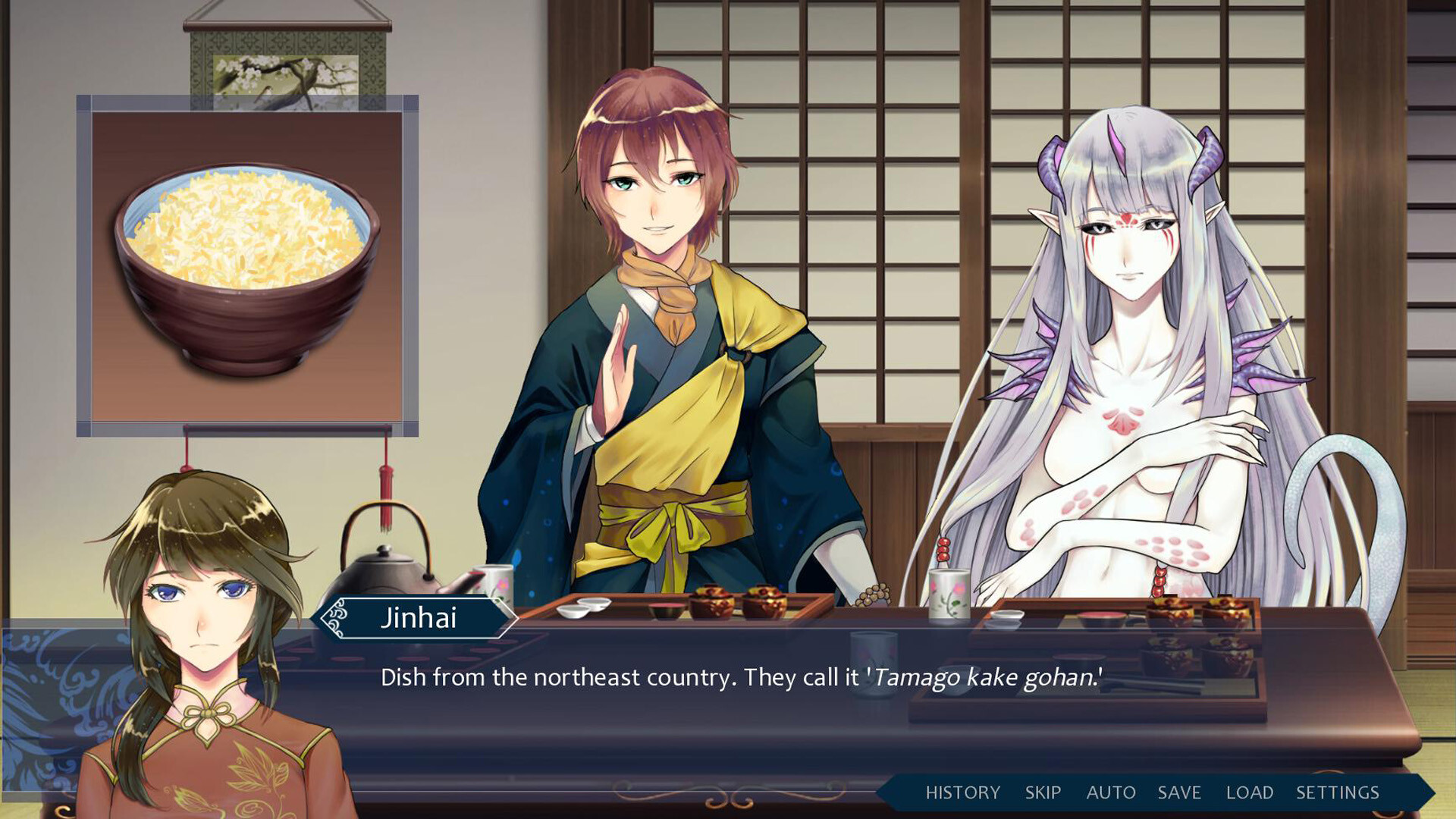
                While Mizuchi incorporates many fantastical elements, particularly with the serpent goddess, Ai, being a major focus, at its core it’s a slice-of-life VN, spending most of its time on the backstories and personal development of the three main characters. This is often done with slow-paced, casual interactions and depictions of daily life in the estate, near-perfectly isolated from the outside world. For those expecting a more dynamic story, or even a primarily romantic one, this might be a disappointment, as you’ll find in it at least just as many discussions about cooking and the local variety of mushroom as you might scenes that contribute to the romance or plot progression. This casual-feeling routine is only occasionally broken up by more dramatic events or tension, with the main axis of conflict being what Jinhai perceives as Linh’s imprisonment or forced servitude to Ai. Things change significantly in the final act of each route, with a lot more stress on supernatural phenomena and higher stakes, but this part might be slightly hard to get to for anyone not tolerant to slow pacing and very subtle character development.
135038.jpg
The amount of ultra-casual moments and “pointless” trivia sometimes threaten to devolve into genuine boredom, particularly in some of the scenes in Jinhai’s route
 
The reason I nearly never had a problem with the game’s relaxed approach to storytelling is that the setting and characters it builds are excellent enough to justify it. Linh starts overwhelmed and hurt, limited in her understanding of the world and striving to come back to her familiar home despite the struggle and possible danger that awaits her there. Her journey is mostly one of understanding her full potential and the injustice of the position she held in her village, which she previously considered as natural and inescapable. She’s believable in her reactions and the game delves pretty deep into emotional mechanisms of trauma, with which she has to deal with over time. All this definitely has a touch of female empowerment in it, as Linh has to break free of the constraints and common sense thinking of her extremely patriarchal and conservative community, with Ai offering her broader perspective on the world and promising new opportunities. Thankfully, it’s done well enough to never feel like pandering and is not exactly detached from the historical realities of medieval China the game takes inspiration from.
                Ai’s and Jinhai’s arcs are harder to talk about without spoilers, but the goddess in particular make for a really interesting character. As a powerful, shape-shifting spirit often moving between the worlds of nature and that of people, she has an attitude that combines a form of misanthropy with curiosity about humans and appreciation of specific individuals. Her arc is mostly themed around fully understanding humans and being able to grasp the love and devotion they often show to each other – a wish clearly signified by her adopted name. Jinhai is arguably a lesser character, as she’s defined mostly by her relationship with Ai and the responsibility she feels to keep her in check. The development she receives is definitely not as deep as that of the other two main characters and her route, by extension, is less captivating – which doesn't mean she isn't plenty likeable and doesn't have her own inner conflicts to resolve.
                I previously mentioned that Mizuchi’s romance arcs are not its central focus and I’m willing to stand by this claim, although I have some conflicted feelings in this regard. The game does some really excellent things when it goes to showing intimacy between the characters when the romance finally blossoms, with a set of mature, but not explicit scenes for both routes (inexplicably delegated to a patch on Steam, while they definitely should be a part of the core package and can hardly be considered "adult-only"). The road to those scenes is, however, kind of cliched and pale in comparison with how interesting the backstories of the characters and the core intrigue are. The positive part is that each route adds something to the understanding of the overall story and lore of the game’s world. Still, the non-romantic “harem” ending felt most satisfying to me, which is really weird for a yuri fanatic such as myself. My only explanation is that seeing all the characters staying together and overcoming traumas of their pasts simply feels like the best possible outcome, so this friendship scenario ends up being more satisfying than romance that naturally pushes someone out of the equation.
135034.jpg
The game does a good job of including some nudity and intimacy without explicit visuals – all mild and tasteful enough that the inclusion of Steam content patch for much of it feels pretty uncalled for
 
Now, for genuine complaints, I have very few, but my biggest one is probably the choice structure. It relies on an invisible affection system, with some choices contributing to it in a less-than-intuitive manner. This means that reaching some of the 5 endings, particularly the true ending for each heroine, can be really frustrating without a guide – while the number of choices is not massive, the sequence you need for those is really specific. Also, the execution of some of the endings was somewhat lacklustre, as they not always managed to explain well-enough what was going on and maintain reasonable pacing. Also, it’s clear that even among the “true endings” Ai’s felt a lot more robust and satisfying, showing where most of the team’s focus actually went.
                Visually, Mizuchi is absolutely beautiful, although it definitely prioritizes quality over quantity. Because the action of the VN is limited to less than a dozen locales, all the illustrations are really high-quality and do a great job of projecting the far-eastern-legend feel of the story. Sprites do not have much variety when it goes to poses and clothes, but once more make up for it with being highly-detailed and gorgeous – and to be fair, the sheer amount of forms Ai shapeshifts into required quite a lot of work to portray properly, in practice creating a significantly higher character count. CGs are relatively few and the high quality of other art kind of prevents them from having as much impact as they would in an average EVN, but that latter part is something I wish I could complain about more often. The music is fairly tranquil in its feel, matching the overall climate of the story – it was very pleasant and never got in the way of reading, which is just what I want from a VN soundtrack.
                In summary, Mizuchi is a game with a slightly niche appeal, due to its heavy focus on slice-of-life content and one that occasionally doesn’t seem to rise to its authors’ ambitions (particularly with the impact of the romance subplots). Despite all that, though, I found it to be a rather excellent experience, with charming characters and story that should satisfy not only yuri fans – while it doesn’t shy away from delving into the GxG love stories, its most important parts are much more universal. Its climate and unique approach to the far-eastern setting are something that should appeal to a broad audience and I recommend every VN fan that wasn’t scared off by my earlier criticism to give Mizuchi a chance. Also, as Aikawa’s debut, it’s a very promising achievement – hopefully, they won’t stop there.
 
Final Rating: 4/5
 
Pros:
+ Beautiful visuals
+ Well-constructed, unusual fantasy setting
+ Likeable heroines
+ Good psychological depth of the main characters
 
Cons:
– Uneven pacing and occasionally dull slice-of-life content
– Unintuitive choice system
– Romance subplots lack impact


VNDB Page
Buy Mizuchi on Steam or Itch.io