Friday, 13 July 2018

Plk_Lesiak’s Shovelware Adventures: Yuri Sakura Games, part 1

Wondering what this series is about? What's with the "crappy" rating system? Find out all about it here​​​​​​​!

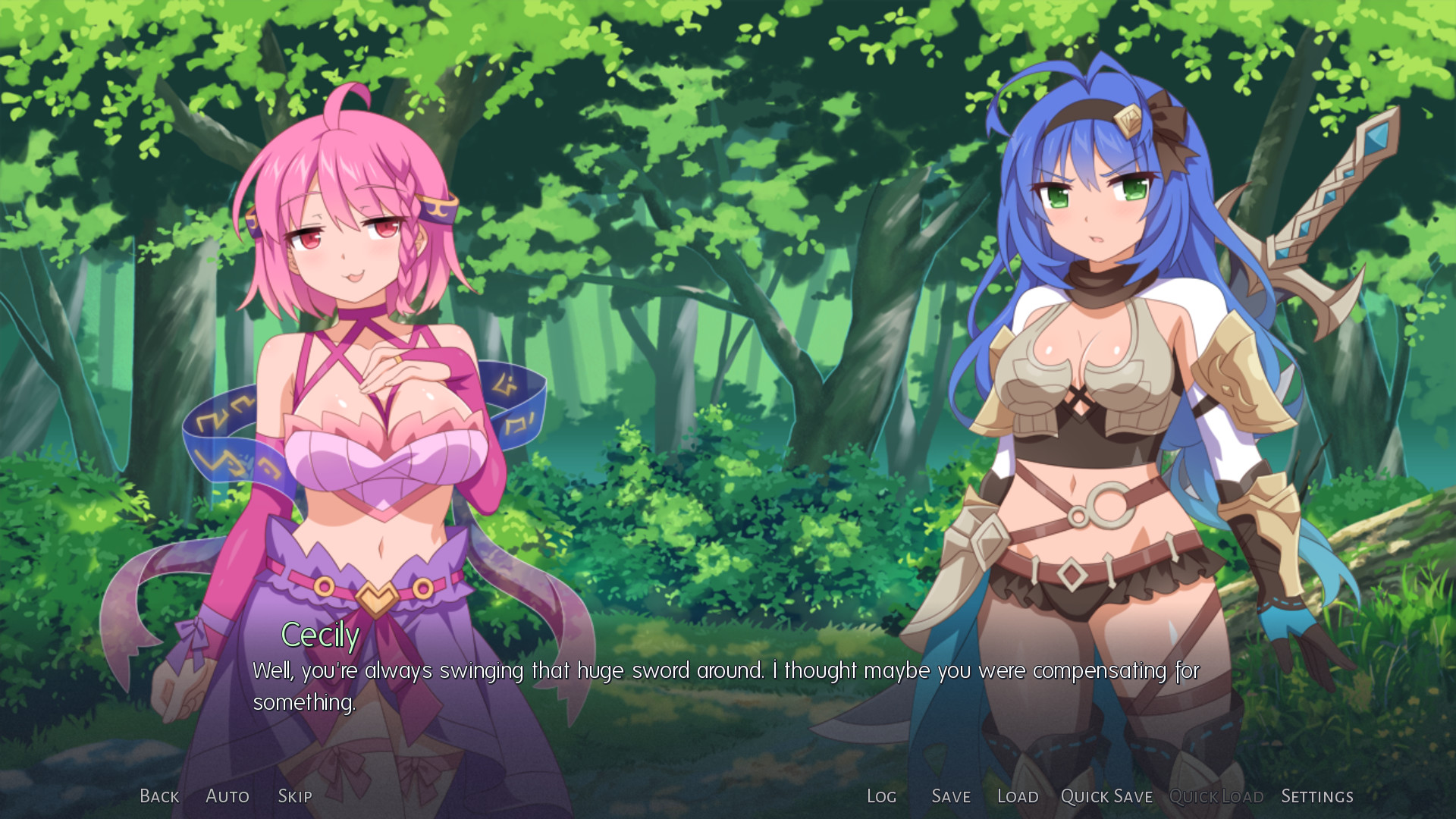
Yuri as a fully-fledged main theme came a bit late to the Sakura Gaming Universe (they’re all connected, I tell you!), but for the last year, it absolutely dominated Winged Cloud’s production, with their last het hentai game, Sakura Magical Girls, released in early 2017. That transition, however, was a long and inconsistent process, which produced both the absolute best among Sakura games (especially Sakura Dungeon with its never-ending stream of good-quality f/f porn and fanservice CGs) and some… Less fortunate projects. Today and two weeks from now I’ll take a closer look at WC’s iterations of Girls’ Love, without ever hiding my intense bias for the genre – one which makes me that more excited when the formula is applied well and that more furious when it’s desecrated by really crappy, uninspired VNs.
 
1_4069.jpg
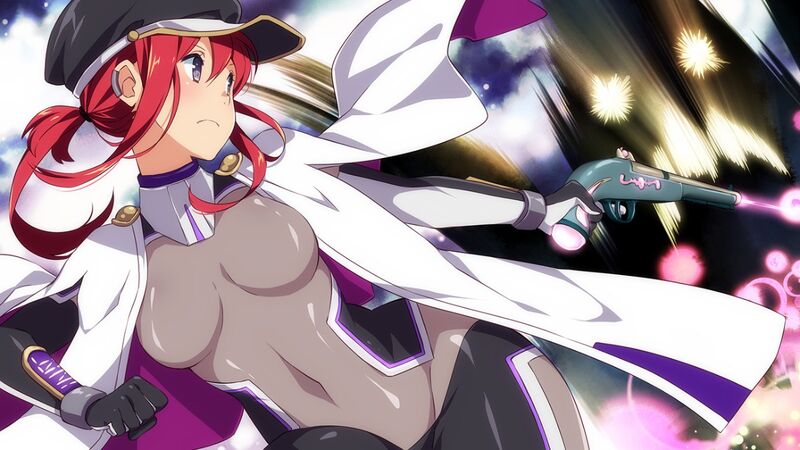
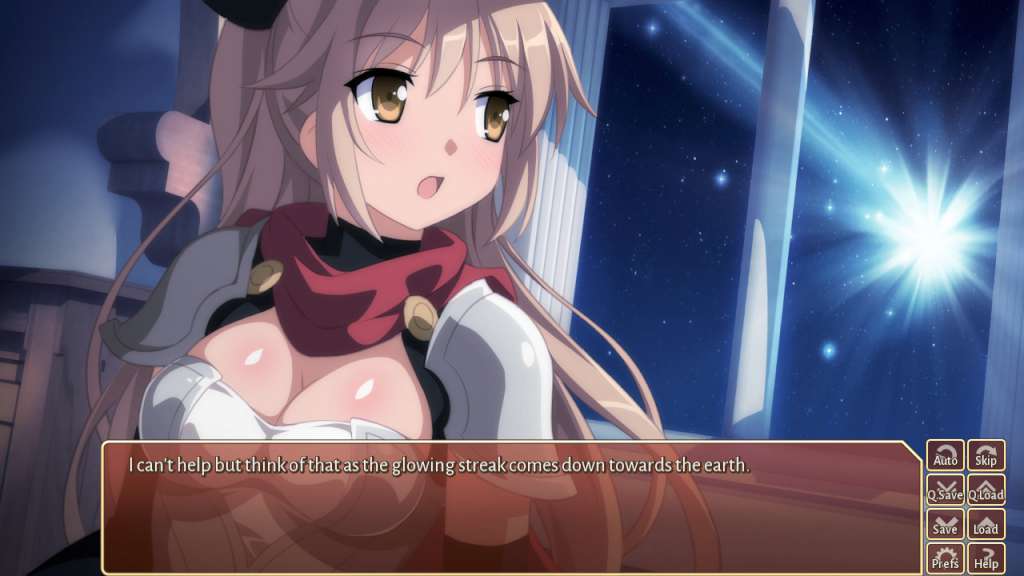
Fantasy, one of WC’s most ambitious, but never-finalized projects, proved above anything else the biggest advantage of yuri-themed ecchi VNs – having a protagonist who is more than just a faceless self-insert, given the minimal amount of character development and as few significant traits as possible, to not disturb the player filling this hollow husk with his own fantasies. Realin is not only an actual character, with a sprite and proper personality (and a convenient, voyeuristic gift of “farsight”, mostly used to peek at people in baths), but even gives out traces of interesting backstory and compelling relationships with the other heroines. The game also, as one of the very few entries in the Sakura series, does some effort to build a setting and a linear story of sorts, predictably based on fairly common fantasy tropes, but nonetheless semi-serious and interesting. The biggest problem is, however, that we’re unlikely to ever know what happened with the crumbling Empire, besieged by magical monsters and the quest to retrieve the Fallen Star – as much as anyone can tell, after the first chapter (which is still rather worth reading by itself, but obviously doesn’t conclude the plot in any way), WC buried this series forever.
 
Final rating: Golden Poo! 

 gold_by_szafalesiaka-dcbhwal.png
800?cb=20180329204453
After the positive surprises in the form of Fantasy and Dungeon came a bitter disappointment called Sakura Space. While we all know that it’s normal for WC’s games to take a theme and make the absolute bare-minimum effort towards utilizing it in a compelling way, I still wouldn’t believe it’s possible to make space mercenaries this boring and mundane if I haven’t seen this particular title. With little variety in locales, uninteresting characters and one of the poorest excuses of a story I’ve seen in VNs (that is, btw, told primarily through text, as action scenes barely ever have CGs or even sprites representing the enemies), it’s wholly underwhelming even by the Sakura game standards. Considering Inma’s character designs also being on the slightly less-fortunate side of the spectrum (apart, maybe, the crew's captain portrayed above), even the fairly nice yuri scenes couldn’t save this adventure of an all-female space privateer team of being simply forgettable.
 
Final rating: Rabbit Poo

  rabbit_by_szafalesiaka-dcbhwb4.png
If anyone thought Sakura Space was bad, a true disaster was awaiting them in an unlikely place. It came with WC’s attempt to go beyond the pure ecchi VN formula and spawn a “dark fantasy” series called Legends of Talia, taking the form of the first and only entry in that franchise - Arcadia. This super-short yuri VN was meant to give a new tone and new quality to WC’s productions, following a tale of a disillusioned knight, worshipped throughout the kingdom as a hero, but now wondering the land without mission or purpose. While it sounded interesting in theory, it failed to deliver on its promises in the most spectacular ways – from stiff and overstylized dialogue (repeating words pointlessly and use obscure terms will obviously make your sentences more refined and serious), through fanservice’y art not fitting the plot, all the way to the tone-deaf writing, it’s a kind of disaster I haven’t seen before or since among commercial OELVNs.
            After seeing 5 minutes of expository dialogue inserted in the middle of a nearly hopeless battle against a fire-breathing dragon, you’ll appreciate every other fantasy VN you’ve read in your life that much more. Still, the saddest part of this might be that this failure cemented WC’s commitment to low-effort ecchi VNs and made it pretty certain that we won’t see this company evolving in any kind of interesting direction in the foreseeable future.
 
Final rating: Smelly Poo

 smelly1_by_szafalesiaka-dcbhwas.png
 
As you can clearly see, the early history of WC’s yurige is a bit of a downward spiral, starting from the very strong entries, showing the full extent of the studio’s creative powers, all the way to the disastrous attempt at creating a new franchise and new style for their VNs. However, as I will show in the next Shovelware Adventures, this tendency thankfully didn’t hold and after Legends of Talia, yuri Sakura games still held a few nice, even if minor, surprises.
 
Be sure to check out part two of this journey through the land of crappy yurige, coming up in two weeks!

PS Once more, my special thanks go to Bosskwar, who made this series possible (or at least much more enjoyable to make) through his let's play videos. 

Wednesday, 11 July 2018

Starlight Vega Review (yuri visual novel)


sv_1_by_szafalesiaka-dbvetp9.jpg
   This review was originally posted on Fuwanovel Forums on December 15th 2017.

Disclaimer: I’m supporting Razz, author of this game, on Patreon and consider myself a fan of much of her work – this might obviously influence the scoring and tone of my review, although I stand by the opinions presented here wholeheartedly.

Yuri/shoujo-ai, as much as some of us might enjoy the theme, is still a fairly small niche among Japanese VNs – one that undoubtedly spawned some great titles and has a loyal fanbase, but is nowhere near being a dominant formula in the genre. It’s enough to look at VNDB statistics on romance elements and protagonist’s gender to see how relatively few quality JP titles yuri fans have available to them (especially if they have to rely on the titles translated to English or/and are looking for more than just erotic content).
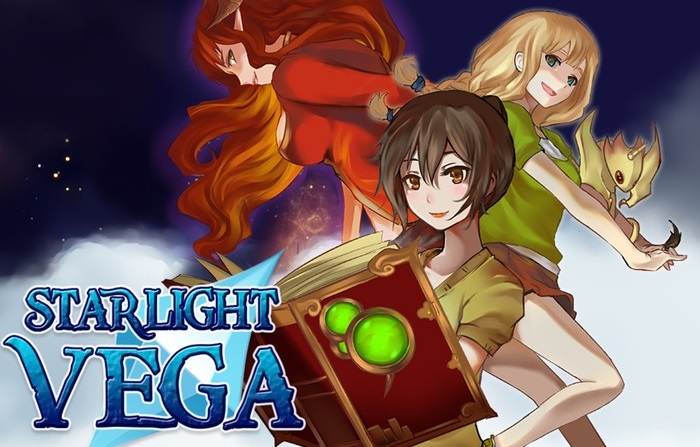
            On the other hand, among western VN producers and audiences, F/F romance seems to gather a much broader appeal, with many highly-regarded titles focusing exclusively on yuri themes and some of the most appreciated developers, such as ebi-hime, devoting much of their work to them. Starlight Vega, developed by Razzart Visuals and published on Steam in March 2016, is definitely not among those most popular or critically-acclaimed western yuri VNs. Still, I think it’s in many ways a notable game worthy of a closer look – most importantly because it shows that visual novels created outside of Japan, even when they stay faithful to the general format of the genre, can have their own identity and style.
sv_2_by_szafalesiaka-dbvetpj.jpg
A western VN set anywhere else than Japan and with non-Japanese characters? Impossible!
 
What might catch your attention early when approaching Starlight Vega is the setting – it happens in an unspecified western country, with characters and scenery appropriate for this context and nothing Japanese in sight. Much of the action happens in places like the old manor inherited by protagonist’s family or the woods surrounding it, producing a believable climate of (most likely) European province and giving a unique feel to the story. When people argue that western VNs are simply inferior imitations of the Japanese originals, it’s often hard to argue with it – especially when non-JP developers copy the absurdly overused high-school drama format and set everything in Japan, no matter how unnecessary it is for the story or how silly it might feel when coupled with originally-English writing (or even worse, English-only voice acting). Starlight Vega definitely looks for its own identity and for the most part succeeds to differentiate itself from the crowd.
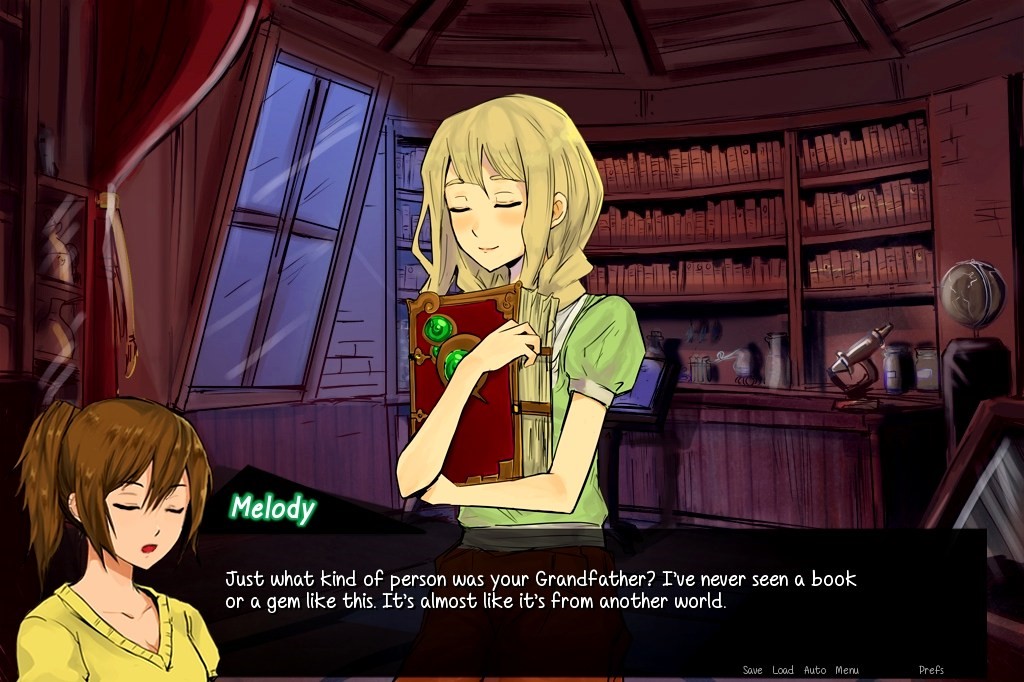
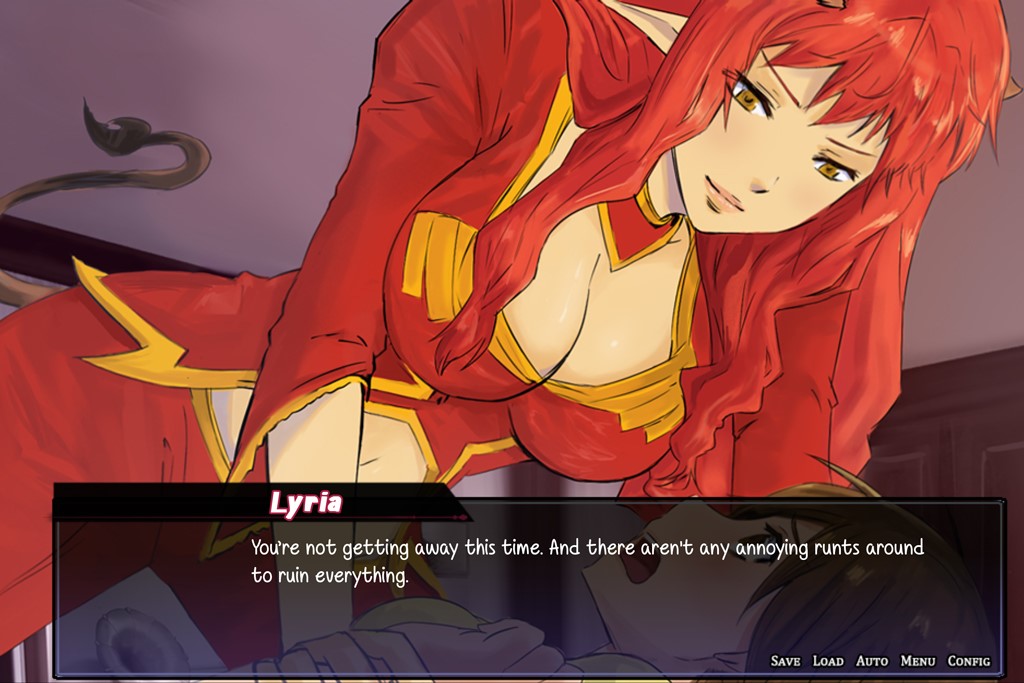
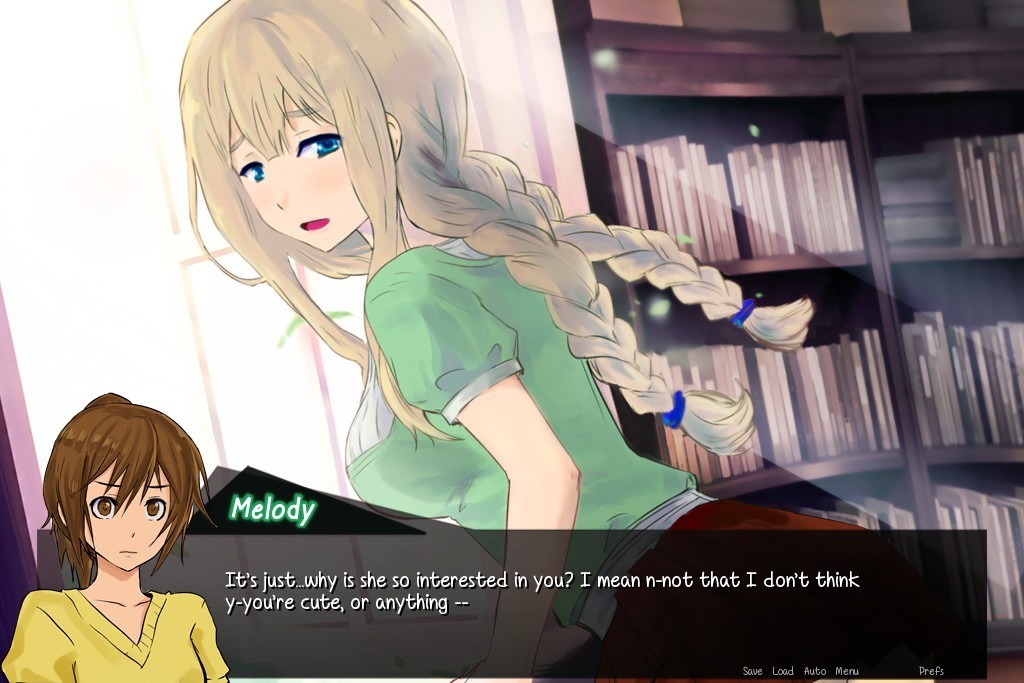
            Without a Japanese high-school as a starting point, we’ve already escaped many of the VN tropes and clichés that could plague this story – and SV does a good job of using this potential to do something a bit different with its plot-line. It starts with the protagonist, Aria, moving into a new home – aforementioned mansion once belonging to her grandfather – using this occasion to invite her best friend Melody for a sleepover. Quickly, strange events start happening, leading the girls to a discovery that suddenly confronts them with a reality of magic, supernatural creatures and various deadly threats, also biding Aria’s fate to a demon she accidentally freed from a crystal. The plot is somewhat relaxed when it goes to pacing, but offers high stakes and decent amounts of drama – much of it is focused on romance, but even in more-relaxed moments it doesn’t forget the life-or-death intrigue happening in the background.
sv_3_by_szafalesiaka-dbvetpr.jpg
At first glance, the game might look like "demon-porn" and does a questionable job of dispelling that notion with how it advertises itself – still, it’s nowhere close to being porn by any reasonable definition.
 
Speaking of romance, this aspect of the game is definitely its selling point and comes out as a positive, even if it's not without problems. The three heroines are very different from each other and offer unique perspectives on the overarching storyline (although there are some inconsistencies and confusing differences between the routes that weren't properly explained in the game). I’ve really enjoyed the emotional dynamic between them and the protagonist and the sexual tension building up in Lyria and Scherza routes. Aria herself is maybe the weakest point here, being rather indecisive and oblivious to clear signals of interest, especially in Melody route (“My best friend can’t possibly love me, even though she confessed to me three times already, right?”) – although this is a very common tactic for prolonging the drama and can be excused to some extent, while in general Aria isn't without some personality and agency. Every romance arc has at least one sex scene, which is mostly delivered through text, accompanied only by partially-nude CGs. The end effect for me felt quite tasteful and enjoyable without ever going into obvious pornography.
            The CGs and the artstyle in general also need to be mentioned in some details, as it’s another way in which this VN differentiates itself from many similar projects. The drawings are often not extremely detailed, but uses softer lines and pastel colours in a way that creates a look distinct from most anime-style visual novels and which for me felt very appealing. Sprites are pretty simple, but good-looking (maybe with a single exception of Aria’s mother and her dead eyes), while CGs vary between pretty and absolutely gorgeous. This style also works very well with the rather-mild eroticism of the story – even at it's most graphic moments, it doesn't feel like hentai. Music, from the catchy menu screen tune to the background music throughout the story matches the overall climate of the game and didn’t make me turn it off at any point, which is much more than I can say about many other indie VNs I’ve read.
sv_4_by_szafalesiaka-dbvetq4.jpg
Romance in VNs often feels rushed and contrived - in Starlight Vega all heroines were at least given backstories and motivations that explain their interest in Aria.
 
The praise I’ve given to SV so far might seem a bit far-fetched, but I think it’s well-deserved and reflects the immense enjoyment the game gave me – obviously, there are also important flaws in it. Some parts of the writing, especially at the beginning of the story, are pretty inconsistent, doing a mediocre job of establishing the characters and making them likeable. Same goes to some endings, like Lyria’s epilogue, which puts the protagonist in some unnecessarily awkward situations, and especially the tacked-on, nearly incoherent bonus harem route – a rather unfortunate execution of a Kickstarter stretch goal. The yuri romance itself suffers from the same problem that's present in many Japanese titles, that is making all the characters gay by default and never elaborating in any meaningful way on their attraction towards woman (what might be somewhat understandable with “demons” from another world, but much less with an apparently average high-schooler such as Aria).
            For me, all these are fairly minor gripes though, for the title which is above all a very sweet yuri romance with an imaginative story and interesting setting. It’s rather short and lacks voice acting, so it definitely cannot compete directly with high-budget titles like Flowers series or Kindred Spirits on the Roof. In its own category though, it’s one of the best indie yuri VNs I've read and a memorable experience, that is definitely worth investing the 7-8 hour necessary to read through the three main routes. It also regularly goes on sale on Steam, so if you’re patient, you can grab it for very little money and receive a decent amount of quality content.

Final verdict: 3.5/5

Pros:
+ Interesting setting and a fairly unique story premise
+ Well-done yuri romance and (non-pornographic) erotic segments
+ Good looking, distinct artstyle
 
Cons:
- Inconsistent storytelling between routes
- Pointless, tacked-on harem route


VNDB page
Buy Starlight Vega on Steam

Friday, 6 July 2018

Sunrider: Liberation Day Review (Visual Novel/Strategy Game Hybrid)


banner2-1500x625.jpg
After the impressive success of the freeware VN/strategy hybrid Sunrider: Mask of Arcadius the game’s developer, Love in Space, soon started working on a sequel, doubling down on their policy of directly imitating the Japanese visual novel formula and apparently devoting much of their newly-found resources and experience to exactly that end. When the highly-anticipated Sunrider: Liberation Day finally released, on March 2016, it came armed with Japanese voice-acting, Japanese theme song and extra amounts of fanservice, ready to conquer the Western-otaku audience with its bombastic facsimile of Japanese eroge. Thus, one of the most amusing chimaeras in the history of the OELVN scene was born, once more to a decent commercial success and mostly positive reception.
            Setting the slightly-absurd “Japanization” aside, Liberation Day is, above all, a sequel of a well-known and, for the most part, respected game, that did much to promote visual novel formula in the West. Mask of Arcadius, as I think most people would agree, remains to this day one of the best VN “space operas”, especially among those officially released outside of Japan and fills a niche mostly unexplored by EVNs. As a sci-fi fan, a good continuation of the Sunrider story was something I really wanted to see and Liberation Day promised to offer just that, in an even grander and more compelling style. Did it deliver on those promises though and does it stand the test of time as well as its predecessor?
https://b.allegroimg.com/original/0c5193/f40ee7b04db7b43d10ba6a6a21fb
The very average female cast and forced romance that ignores player's previous choices are at the center of the story in Sunrider’s sequel, taking the focus away from its strongest part – the galactic war drama 
 
The already mentioned “remodelling” of Sunrider even further into an imitation of Japanese VNs is the first thing you notice after running the game – the pompous theme song, combined with Japanese voices of the heroines and gimmicky opening sequence, with tons of “cinematic” cuts and animations are simply overwhelming. It’s something I honestly haven’t seen in any other OELVN and which makes Liberation Day a quintessence of a “weeb game” – trying to be more Japanese than actual Japanese VNs themselves and ending up laughable in its obvious over-stylisation. Thankfully, after the initial shock passes, it has a lot of campy charm and can be very enjoyable if you don’t take it too seriously.
             Besides that though, the game retained the general formula of its prequel, which only minor changes to the dialogue system (talking to the crew between missions, through a ship-map interface) and the turn-based strategy segments. The hex-based combat was slightly streamlined in the graphical department, removing some animations and effects that overly prolonged every move, while adding a few new ships for player’s use (as mercenaries, because the core mecha squadron didn’t receive any expansion) and some new enemies. This, however, shouldn’t bother the people that enjoyed Mask of Ardacius that much, as the tactical depth and challenge they know is still very much intact and should be probably the most important factor of their enjoyment of the game. For those less interested in strategy aspect, the story-oriented difficulty from the first game is still present, this time shamelessly labelled as “waifu mode”. 
ss_9d73bb1cfb05f24877b1558ae1738198518e3
The game’s strategy elements are as solid as in the first game, but disappoint slightly with lack of innovation
 
However, the actual problems start with the game’s story, which this time is even more linear and leads the plot in directions that are simply alienating to the player. While the first game mostly offered an illusion of choice (dialogue options didn’t influence the ending and have only a minor impact in the sequel), the moral dilemmas did a lot to enhance immersion and make you empathize with Sunrider’s captain and crew, even if their characterisation was not always the best. Here, you have no control over their actions and can only passively observe their obvious mistakes and protagonist’s forced romance with a character I personally didn’t care about at all. What’s worse, all this leads you into a horrible ending, which simply nullifies everything you worked for the whole duration of the two games and leaves you with little hope or satisfaction, adding a clunky cliffhanger on top of that.
            This would be an absolute deal-breaker for me – and probably was for many people playing the game at its release. However, the authors most likely understood their mistake and released a DLC which at least partially mitigated this blunder – an alternate timeline scenario, focused purely on VN-style storytelling and sending the protagonist back in time to fix his failures. This content, now available for free with every purchase of the game, not only opens a way towards a more satisfying conclusion, but also provides the player with an opportunity to pursue romances with the girls other than the one from the main plot (along with h-scenes unlockable with a free patch). While I was sorely disappointed with the main story of Liberation Day, I was positively surprised with the quality of this “bonus” content, especially because it directly answered to my disgust with original conclusion, making averting it both mine and protagonist’s main motivation to go forward. It was even written well enough to make the characters I previously completely didn’t care about somewhat amusing – the cast, of course, remained pretty flat and generic, but I’ve warmed up towards even the most annoying members of it after finishing their respective routes (although the first officer, Ava, is still the only character I really ever cared about in this game). Against all odds, it let me leave this game with purely positive feelings.
return1.jpg
The alternate-timeline DLC offers a more classic VN experience and does much to salvage the otherwise underwhelming story 
 
The game’s visuals are at the same solid, but never-impressive level of the first Sunrider, with decent-looking, but simple sprites and CGs (I honestly couldn’t force myself to unlock the h-scenes and assess their quality, but I would expect them to be at a similar, average level) and backgrounds. The battles, while less flashy than in the first game to overcome some engine limitations, still have quite a lot of impact to them and are generally nice to look at. The new additions, Japanese voice acting and the theme song, are of very decent quality and can be appreciated after the initial cultural shock passes.
            In the end, Sunrider: Liberation Day felt like a step backwards from the original, initially offering much less variety and weaker immersion, and only later somewhat making up for its shortcomings. It’s a strange example of a misguided attempt at boosting the appeal of an OELVN not by offering something unique, but through clunky mimicry of Japanese games, which in the end only proved counter-productive. It also contained some absolutely awful pieces of contrived, depressing storytelling, leading the main campaign’s plot into that awful place of “baiting for a sequel you never want to see”. But it was also, thanks to its DLC and fun game mechanics, an ultimately positive experience and decent point of closure for the Sunrider franchise. With all its flaws, I still wholeheartedly recommend playing it, especially if you’re into sci-fi or the space-opera formula.

Final score: 3,5/5

Pros:
+ Still solid and challenging strategy game mechanics
+ Good quality of voice acting and sound design
+ Compelling DLC content with traditional VN storytelling and romance
 
Cons:
- Alienating main story with no player agency
- Lack of meaningful innovation in strategy sections
- Horrible ending for the main campaign
- Over-the-top “weeb” feel


VNDB page
Buy Sunrider: Liberation Day on Steam or GOG

Wednesday, 4 July 2018

One Thousand Lies Review (free visual novel)


otl_1_by_szafalesiaka-dbvaule.jpg
This review was originally published on Fuwanovel Forums on December 8th 2017

As we all know from experience, the formula of visual novel offers various possibilities when it goes to storytelling techniques, making especially the high-budget, Japanese games in the genre much more than just interactive, illustrated books. Still, for most VNs text is unquestionably the core method of delivering the story. This is true especially for the western-developed ones, which rarely can afford high-quality voice acting or animated segments which could occasionally replace written dialogues and descriptions. Even CGs, in a project with a very limited budget and manpower, often end up being few and far between. All this makes the literary quality absolutely crucial for the success of such projects. But, great writing is not something you would expect to find in a free game on Steam, is it?
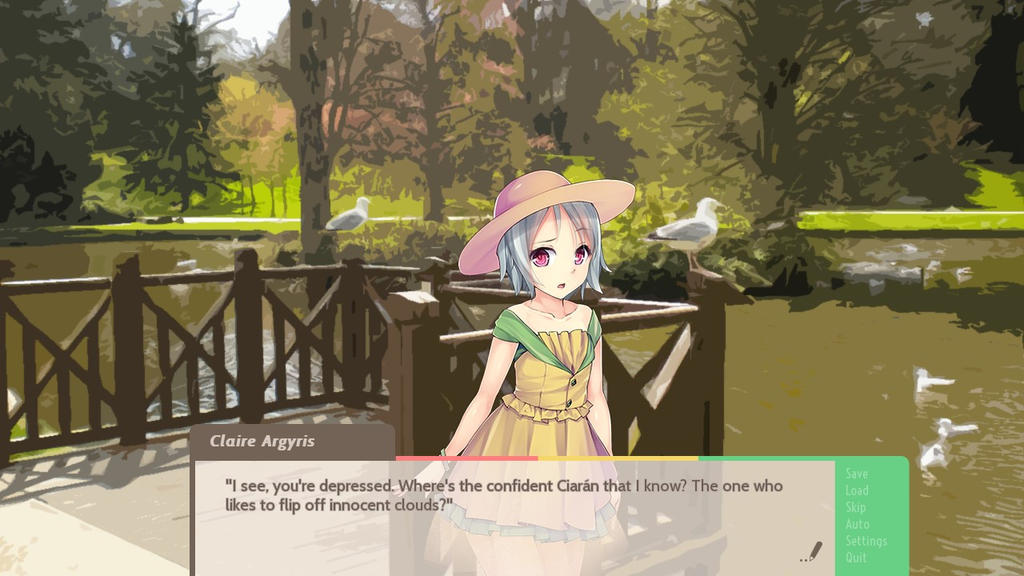
            While Doki Doki Literature Club proved that a free-to-play, western-made VNs can from time to time surpass everyone’s expectations, in many ways it wasn’t the first project of its kind. One Thousand Lies, developed by Keinart Lobre and released for free in March 2016, both on Steam and mobile platforms, is another example of an interesting and well-developed non-JP visual novel that doesn't charge even a cent for the possibility of reading it. In my opinion, it’s also one of the more intriguing and creatively written western VNs to date, that can offer a lot of depth and artistic qualities to any reader patient enough to uncover them. Still, it never gathered attention and recognition similar to that of DDLC.
otl_2_by_szafalesiaka-dbvaury.jpg
The game doesn’t shy away from metaphors, symbolism and poetic segments – it’s most likely it’s bigger strength, but some mind find it overbearing
 
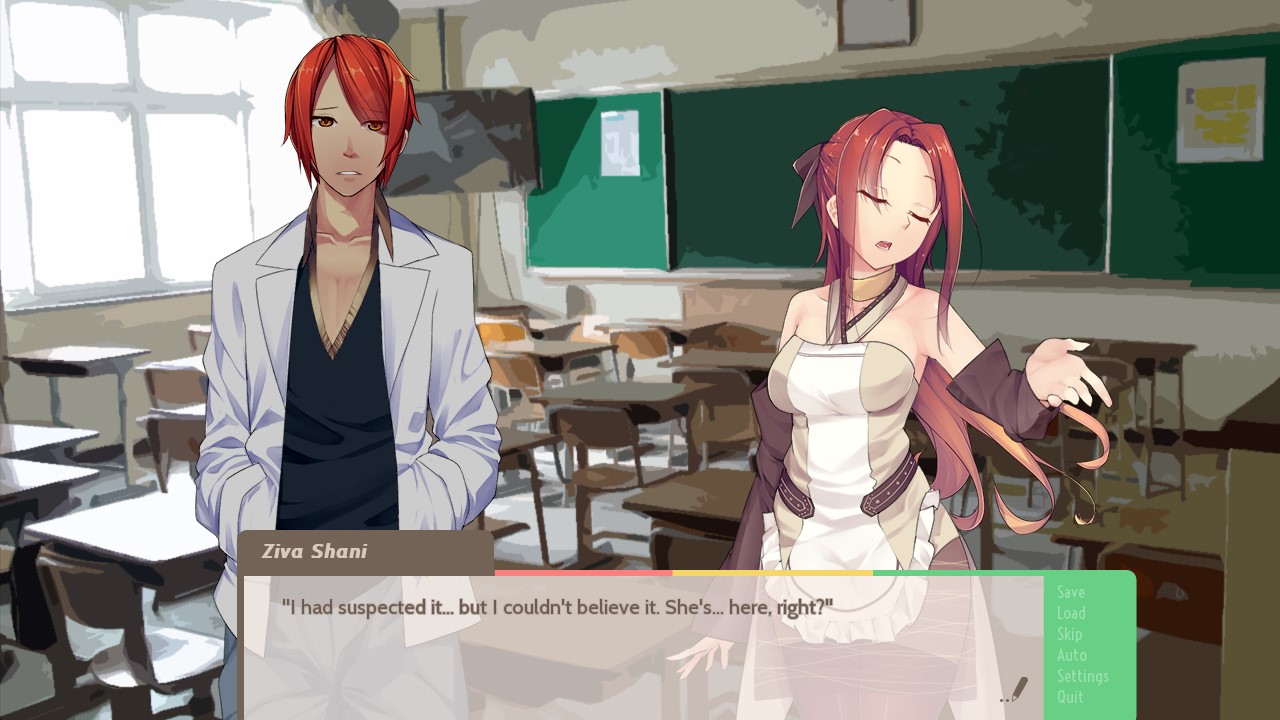
Why do I mention patience at the very beginning of my review though? OTL is a mystery/romance VN, with the emphasis being definitely on the “mystery” part. The story, if we ignore the rather cryptic prologue scene, might at first seem like a casual slice-of-life. It follows Ciaran, an apparently average male high-schooler with a somewhat nasty attitude and his small group of close friends, in a setting of a small Spanish town. Yet, it quickly introduces a sequence of strange, inexplicable events, that make you question the logic of the plot and clearly suggest a deeper meaning behind it all. Unrealistic, over-the-top comedy segments, occasional references to philosophy and psychological theory, poetic fairy tales written by the protagonist (beautifully crafted, but at first unclear in their meaning), all further encourage the feeling that we’re missing something crucial, necessary to connect the dots. Like in many stories of this kind, the author insists on keeping his audience in the dark until the very last moments, where with a new revelation everything comes together, giving sense to all past occurrences and previously incomprehensible actions of the characters. The downsides of this approach are pretty obvious - even Steam reviews clearly shows, that for less dedicated readers this form of storytelling might be too confusing and even boring, especially because there's little that player can do to solve the mystery by him/herself.
otl_3_by_szafalesiaka-dbvasq2.jpg
The names and appearance of the characters are never without hidden meaning – although uncovering some layers of the story might be a little too complicated, even for a careful and dedicated reader
 
With OTL being a kinetic novel, it's hard to deny that its style of storytelling can be especially taxing on the player, who has no influence over the action on screen and can only passively observe and try to put the pieces of the puzzle together – most likely without much effect, as the most important parts are intentionally kept hidden from him. Still, while the ultimate meaning of the story reveals itself very late, the core content offered in the meantime is by itself very much worth reading. Well-written dialogues, surprising, absurd humour and interesting characters, all with their own quirks and mysteries to uncover, can make even the most casual moments of OTL quite engaging and fun to read. Darker themes, mostly connected to the protagonist’s mental health (which is, in reality, much more important than the theme of lies and deception, suggested by the title), shows up gradually and constantly poses new questions and adds new layers of meaning to the plot. A patient reader is also rewarded with an ending in my opinion worthy of all the build-up leading to it – bitter-sweet to some extent, but compelling and hopeful enough to leave you satisfied (and maybe even quite moved – it definitely made my eyes go teary for a few moments).
otl_4_by_szafalesiaka-dbvasq5.jpg
The game’s visuals might be limited, as it often is with one-person passion projects, but still manage to be rather consistent and pleasing to the eye
 
All this is supported by the somewhat simple, but appealing visual assets. The most memorable part of the graphical layer is definitely the gorgeous, masterfully designed character sprites, which gives the game much of its personality. Those are supported by good-looking CGs (although there’s very few of those – 7 in the whole game) and basic photographic backgrounds, edited well-enough to not stand out in a negative way. Similar things can be said about music, which never stood out to me very much, but complimented the rest of the content very well – while I definitely think literary qualities are OTL’s greatest strength, other aspects are also all-around solid. One thing that also has to be mentioned is that the game seemed to be originally developed in Spanish. This makes the English version I’ve played that more impressive – it never felt like a translation from a probably superior original, but exactly the high-quality product it was meant to be.
           In summary, I strongly encourage every VN fan to give One Thousand Lies a try. It’s definitely not a perfect game and the storytelling formula it uses (obscuring crucial information from the reader and then using it as a deus ex machina) was criticised many times in the past and in connection to countless pieces of media. It also presents one of the less appealing protagonists I’ve encountered in visual novels – an assessment that holds for the most parts even after we learn the reasons behind his behaviour. All that being said, it definitely manages to stand out from the crowd with impressive literary qualities and memorable story, while tackling important and rarely discussed topics in an intriguing and convincing way. Saying more would spoil it, but if you give this game a proper chance, it will definitely be worth your time (it takes around 7-8 hours to fully read through) – and being free to play, that time is all it will ever ask from you.

Final verdict: 4/5

Pros:
+ Fairly unique, multi-layered story
+ Well thought-out characters that can and will surprise you
+ Interesting, well written philosophical and poetic segments
 
Cons:
- Can be confusing and intentionally misleads the reader – doesn’t let you solve the mystery for yourself
- Some segments of the story can drag on for too long
- Over-the-top, random humour might take you out of the experience


VNDB page
Download One Thousand Lies for free on Steam or Google Play

Sunday, 1 July 2018

The comprehensive list of visual novel-related Steam Developer and Publisher Homepages

Steam Developer and Publisher Homepages are the new tool created by Valve, allowing you to follow your favourite creators and be notified about any new releases by them. While I've shared my thoughts and concerns about this feature some time ago, I find its appearance as a generally positive development and decided to create a list of all profiles that could be interesting from the point of view of a visual novel fan. While, for the most part, major companies and most active VN developers have already established their homepages, I want to think of this as a perpetual work-in-progress, being updated as new creators and publishers enter the scene or set up their Steam profiles. The order in which Homepages are featured reflects my personal impression of their relevance – it might be shifting in the future, including the placement in the "major" or "other" categories. The titles representing these companies' work were also chosen somewhat arbitrarily – they are meant to offer a basic overview of the range of games they offer on Steam, which may, but not always do overlap with their best, flagship titles.

I hope you'll find this list useful and if you have a profile you think should be added here, please leave a comment or contact me through the form on the sidebar. I will try to review the Homepages list on Steam frequently, but reaching out to me is the best way to make sure I don't miss your page (even by this point of time, there's a lot of them). All other feedback will also be appreciated.

 
Major EVN Developer and Publisher Profiles 

Major JP VN Developer and Publisher Profiles 

Other VN Publishers
 
Other VN Developers

Last update – July 16th 2020

My special thanks go to the good people of Fuwanovel and Lemmasoft Forums, who offered me encouragement and feedback during the process of making this list.